
How to Choose the Right Oil Vacuum Pump?
Choosing the right oil vacuum pump starts with the process, not the catalogue’s lowest pressure figure. A packaging line, laboratory chamber, and CNC fixture each need different pumping speed, ultimate pressure, and oil-handling capacity. The International Energy Agency’s Energy Efficiency 2023 report estimates that industry accounts for about 37% of global energy consumption. That figure is not a pump-specific statistic, but it highlights why operating efficiency deserves attention.
Start by recording chamber volume, target pressure, pump-down time, duty cycle, and gas composition. Check whether vapors or particles could contaminate the oil. Then compare pumping-speed curves at your actual working pressure; free-air displacement alone can mislead. ISO 21360-1:2020 provides standard methods for measuring vacuum-pump performance, helping buyers compare published results under defined test conditions. Ask suppliers for the test basis, service intervals, and oil-mist control details. Small details matter.
A common mistake—one worth admitting—is choosing for peak vacuum and overlooking routine maintenance. A pump that reaches a low pressure may still be a poor fit if it runs continuously, draws excess power, or needs frequent oil changes. Consider noise, installation space, spare-part access, and the cost of downtime. There is no perfect pump. The right oil vacuum pump is the one that reliably meets the process requirement, under real operating conditions, with manageable lifecycle costs. Recheck your assumptions before purchasing; the first specification is not always the final one.
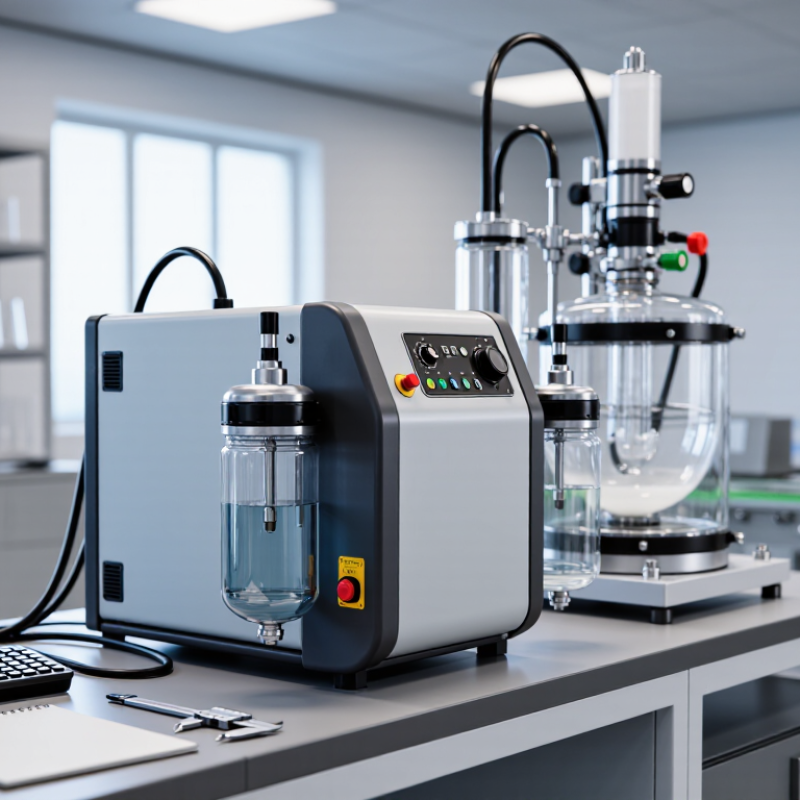
Define the Vacuum Level, Flow Rate, and Operating Conditions Required
Choosing an oil vacuum pump starts with the vacuum level your process actually needs. Check the required pressure in absolute units, such as millibar or pascal, and distinguish normal operation from brief peak demand. A chamber may reach its target pressure eventually, yet take too long if the pump is undersized. Consider chamber volume, hose diameter, fittings, and expected leaks. Small details matter.
Next, estimate the gas load and flow rate during evacuation, not just the pump’s advertised maximum displacement. A wide chamber, frequent door openings, or moisture release can slow pump-down. Review operating temperature, duty cycle, and the vapors the system may encounter. These conditions affect oil quality and maintenance intervals. If process gases can condense, consult the pump’s technical documentation and use suitable protective measures. I would leave some capacity margin, but not assume more is always better; oversized equipment can add cost and energy use.
Tips: Record the target pressure, chamber volume, and pump-down time. Note ambient temperature and expected vapor exposure. Then compare these figures with the pump’s performance curve, not a single headline rating. Real setups can behave differently, so confirm the choice with a measured trial when possible.
| Pump configuration | Typical ultimate pressure* | Typical pumping-speed range* | Suitable applications | Operating conditions and selection notes |
|---|---|---|---|---|
| Single-stage, oil-sealed rotary vane | Approximately 1–10 Pa | Approximately 2–300 m³/h | Rough vacuum duties such as vacuum holding, simple degassing, and laboratory equipment. | A practical choice when moderate vacuum is sufficient. Check gas compatibility, oil temperature, and whether the process releases water vapor or other condensable vapors. |
| Two-stage, oil-sealed rotary vane | Approximately 0.1–1 Pa | Approximately 2–300 m³/h | Applications needing a deeper base pressure, including vacuum drying, freeze-dryer backing, and analytical instruments. | Use clean, compatible pump oil and maintain seals and filters. A gas ballast can help handle condensable vapor, but may raise the achievable ultimate pressure while open. |
| Oil-sealed rotary piston | Often approximately 0.1–10 Pa, depending on design | Commonly tens to over 1,000 m³/h | High-throughput industrial rough-vacuum systems, large chambers, and processes with substantial gas loads. | Consider floor space, noise, oil handling, and service access. Confirm the required inlet pressure and continuous-duty rating with the pump curve. |
| Roots booster with an oil-sealed backing pump | System-dependent; commonly used to increase throughput in the rough-to-medium vacuum range | Booster displacement varies widely; select together with the backing-pump speed | Large chambers or processes requiring faster pump-down and higher gas throughput than a backing pump alone can provide. | A Roots booster is not a standalone atmospheric-pressure pump. Follow the manufacturer’s permitted inlet-pressure range and use an appropriately sized backing pump and protection controls. |
| Moist or condensable-vapor process | Set by the required process pressure and vapor load | Size for both chamber volume and vapor throughput | Vacuum drying, evaporation, and processes that release water or solvent vapor. | Check vapor tolerance, gas-ballast capability, exhaust mist control, and the need for an inlet trap or condenser. Prevent liquid carryover into the pump. |
| Corrosive, reactive, or contaminated gas | Application-specific | Determine from gas load and allowable process time | Processes involving aggressive chemicals, particles, or gases that can degrade oil or internal components. | Verify material compatibility and contamination controls before selection. An oil-sealed pump may require protection, filtration, frequent oil changes, or a different pump technology. |
| Selection note: Typical pressure and speed ranges are indicative, not guaranteed specifications. Actual performance varies by model, gas type, inlet pressure, temperature, and measurement method. Size the pump using the required chamber pump-down time and gas or vapor load, then confirm performance from the manufacturer’s pump curve. | ||||
Related Posts
-
2026 Top Oil Vacuum Pump Types for Global Buyers
-
2026 Top Oil Vacuum Pump Types Which One Is Best?
-
2026 Top Vacuum Pump Oil Types for Global Buyers
-
Unlocking Efficiency: The Science Behind Dry Rotary Vane Vacuum Pumps and Their Industry Applications
-
2026 Best Vacuum Pump Oil for HVAC and Industrial Use?
-

What is an Oil Less Vacuum Pump and How Does It Work?