Choosing an oil vacuum pump in 2026 is not just a matter of comparing price and pumping speed. Buyers must match pump design to process conditions, including ultimate pressure, vapor load, duty cycle, and contamination risk. A rotary-vane pump may suit a compact laboratory or packaging line. A liquid-ring model can handle wet gas more comfortably, while oil-sealed screw pumps often serve continuous industrial duties. The differences matter. A poorly matched pump can mean more oil changes, unstable pressure, or unnecessary downtime.
Demand in high-tech manufacturing offers useful context, but it is not a direct measure of pump sales. SEMI’s December 2024 forecast projected global semiconductor manufacturing equipment sales of about $113 billion in 2025 and $121 billion in 2026. That investment signals ongoing demand for controlled vacuum processes. It does not prove that every facility needs the same pump type. Real operating conditions decide more than a market headline.
This guide compares the leading oil-sealed pump categories for global buyers, from rotary vane and rotary piston designs to liquid-ring and screw technologies. It considers pressure range, vapor handling, maintenance needs, and energy use. Check datasheets against actual process requirements, and confirm service support in the destination market. Ask about oil-mist control, spare-part lead times, and performance under continuous operation. Those details are easy to overlook. Selection is rarely tidy. A trusted specification still needs field testing.
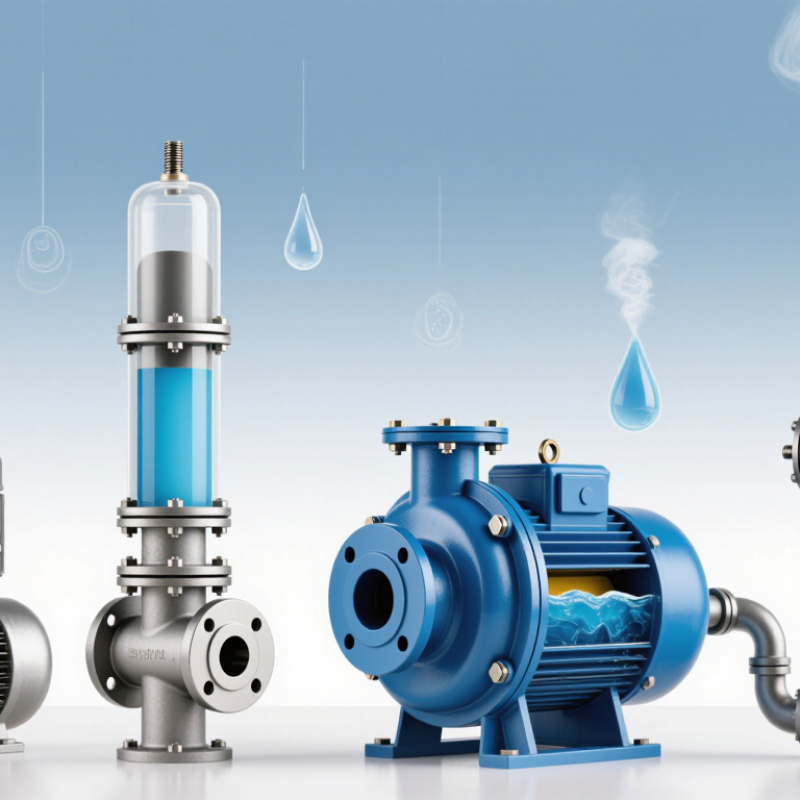
Oil-sealed vacuum pumps use a moving mechanism, commonly rotating vanes, to trap and compress gas. A thin oil film seals small clearances, reduces friction, and helps limit gas leakage inside the pump. Simple in principle. Yet oil condition matters: contaminated or overheated oil can weaken sealing and shorten service life.
Operating pressure is not the same as ultimate pressure. The ultimate figure describes the lowest pressure a pump may reach under specified test conditions. Real processes often run at higher pressures, especially during evacuation or when gas continually enters the chamber. Capacity, usually stated as pumping speed, indicates how quickly gas can be removed. It can fall at the inlet when narrow pipes, valves, or filters restrict flow. Check the pump curve at your intended working pressure, not just its headline capacity.
For a practical selection, match pressure range and pumping speed to chamber volume, cycle time, and gas load. Moisture or condensable vapor may require a gas ballast, which helps reduce condensation inside the pump but can affect achievable pressure. Watch the oil sight glass during operation; cloudy oil is a useful warning, not a diagnosis by itself. Buyers sometimes choose a larger pump to compensate for poor piping. That may work, but it can waste energy and still miss the target. The honest answer is that operating conditions deserve measurement before sizing.
Oil-Sealed Vacuum Pumps: Typical Ultimate Pressure Ranges
How they work: Rotary-vane pumps use sliding vanes and oil to seal and lubricate the pumping chamber. Rotary-piston pumps use an oil-sealed reciprocating piston, while oil-injected screw pumps use intermeshing rotors with oil for sealing and cooling.
Ranges are indicative typical ultimate pressures in mbar, not guaranteed operating limits. Actual results vary with pump design, gas ballast, inlet conditions, maintenance, and measurement method. Lower pressure means a deeper vacuum.
Many global buyers still consider two-stage rotary-vane pumps when stable low-pressure operation matters more than oil-free handling. Two compression stages evacuate gas in sequence, while an oil film seals small clearances inside the pumping chamber. With clean oil, sound seals, and a suitable test setup, some models can approach 0.1 Pa. That is an ultimate-pressure figure, not a promise for every process. Important distinction.
In real installations, the inlet hose, trapped moisture, and continuous gas load can keep pressure higher. Oil condition matters: contaminated oil may slow evacuation and shorten service intervals. Use the specified oil grade and check it after warm-up, not only before startup. A calibrated vacuum gauge near the chamber gives a more useful reading than a pump-only specification. Small details count.
Match displacement and motor duty to chamber volume and cycle time; a larger pump is not automatically better. Excess capacity can increase energy use and oil-mist management needs. Gas ballast can help handle condensable vapor, but it may worsen the lowest achievable pressure. That trade-off is easy to overlook. A specification sheet looks neat; workshop readings are often less tidy.
Roots booster pumps increase throughput in the medium-vacuum range, but they are not standalone pumps. Many systems use them around 5–100 mbar, though the usable range depends on pump design, gas load, and temperature. Not by itself. A Roots stage needs a backing pump to remove gas from its outlet and control forepressure. Without that support, pressure differences can cause excess heat, overload, or protective shutdown.
The backing pump also affects the system’s achievable pressure and stability. Select it for the booster’s displacement and the process gas load, not just the chamber volume. For example, a chamber may reach the target pressure slowly if a long, narrow pipe restricts flow. That matters. In practice, users sometimes focus on the booster’s capacity and underestimate leaks, vapor release, or filter resistance. These details can shift the working range. Check the manufacturer’s operating limits, monitor outlet pressure and temperature, and use an interlock where required. The 5–100 mbar figure is a useful starting point, not a universal guarantee.
| System element | Typical role | Indicative pressure range or condition | Backing-pump requirement | Selection considerations |
|---|---|---|---|---|
| Roots booster pump | Increases pumping speed in the rough- and medium-vacuum range by transferring gas with rotating lobes. | Many conventional systems use the booster within an approximate inlet-pressure range of 5–100 mbar. The permissible continuous inlet pressure is design- and system-dependent. | Normally requires a backing pump to maintain outlet pressure and remove the transferred gas. | Check the pump’s continuous operating limit, maximum differential pressure, gas load, and cooling requirements in its technical documentation. |
| Oil-sealed rotary-vane backing pump | Provides the backing pressure for a Roots booster and can serve as a stand-alone rough-vacuum pump. | Typical ultimate pressure for many two-stage designs is around 10−3 mbar; actual performance varies with design, gas load, and condition. | Common backing option for clean, relatively dry gas service. | Consider oil maintenance, oil-vapor management, condensable vapors, and compatibility with process gases. |
| Dry screw backing pump | Backs the Roots booster without using oil in the compression chamber. | Ultimate pressure and operating envelope vary by model; dry screw pumps are commonly used for rough-vacuum backing and process duties. | Often paired with a Roots booster where oil-free compression or reduced oil contamination is important. | Assess gas and vapor compatibility, purge requirements, particle handling, temperature control, and maintenance intervals. |
| Roots booster with a single backing stage | Offers a relatively simple arrangement for increasing throughput at moderate vacuum levels. | Operating pressure depends on booster size, backing-pump capacity, gas throughput, and the booster’s permitted differential pressure. | Backing-pump capacity must be adequate for the booster’s discharge flow and process gas load. | Confirm the complete system curve rather than selecting the booster by nominal pumping speed alone. |
| Roots booster with multiple stages | Uses two or more boosters, commonly with a backing pump, to increase effective pumping speed over a wider pressure range. | Stage arrangement and usable pressure range are system-specific; no single pressure limit applies to all configurations. | Requires a backing pump sized for the combined gas load and the selected booster arrangement. | Review start-up sequence, pressure controls, thermal limits, and protection against excessive differential pressure. |
| Pressure control and protection | Helps keep the booster within its allowable operating envelope as chamber pressure and gas load change. | Control settings must follow the pump manufacturer’s specified limits; the 5–100 mbar range is an indicative system range, not a universal rating. | Requires pressure measurement and, where specified, bypass, interlock, or variable-speed control. | Provide suitable gauges, overload protection, and a control strategy for start-up and process transitions. |
| Typical applications | Used where higher gas throughput or faster pump-down is needed in rough- and medium-vacuum processes. | Examples include vacuum drying, metallurgical furnaces, coating systems, and large vacuum chambers. | Backing-pump type should match the gas composition, vapor load, and cleanliness requirements. | For corrosive, condensable, explosive, or particle-laden gases, verify materials, seals, purging, and safety provisions. |
Technical note: Pressure ranges shown are general, indicative values rather than guarantees. A Roots booster is usually selected as part of a complete pumping system; actual operating limits and performance depend on pump design, backing pressure, gas load, temperature, and manufacturer specifications.
Oil diffusion pumps are used when a vacuum system needs pressures well below those commonly reached by rotary-vane pumps alone. With a suitable backing pump and a clean, well-sealed chamber, some systems can reach about 10⁻⁷ mbar. This is a practical reference point, not a guaranteed result. The actual pressure depends on chamber size, leaks, surface outgassing, and the measurement method.
Inside the pump, heated oil forms a fast vapor jet that transfers gas molecules toward the exhaust. The pump needs time to warm up, and its oil must remain within the recommended operating condition. A cold trap or baffle can help limit oil backstreaming into the chamber. That matters. Even a thin film may contaminate sensitive surfaces or affect later process results.
For global buyers, compare the pump’s stated ultimate pressure with the full system requirements, including backing-pump capacity, cooling, and maintenance access. Ask how performance was measured. A specification alone can be misleading. Diffusion pumps can be cost-effective for steady, high-vacuum work, but they are not ideal for every process. Their warm-up time and oil handling deserve honest consideration before purchase.
Oil-sealed rotary-vane pumps suit many rough-vacuum duties, while oil-sealed screw designs can handle some continuous industrial processes. Compare pumping speed at your actual working pressure, not only the headline displacement. A pump rated at 100 cubic metres per hour may deliver less under your process load. Ask for a speed curve and test conditions, including gas type and inlet pressure. Small details matter.
Oil backstreaming can contaminate chambers, optics, or sensitive samples. Request measured backstreaming data and check whether the test used a cold trap or baffle; these can change results. ISO 21360-1:2020 sets out general methods for measuring vacuum-pump performance, while ISO 21360-2:2020 covers positive-displacement pumps. Request a dated test report and compare results obtained under matching conditions. One trade-off is easy to miss: lower contamination may require extra components or maintenance.
Tips: Check the curve at your target pressure. Confirm the test setup. Ask about oil-mist filtration, anti-suckback protection, and service intervals. Reported data can still leave gaps, so verify performance in your own process before final selection.