What Are the Best Custom Engineering Solutions in 2026?

The best custom engineering solutions in 2026 are not necessarily the newest or most automated. They are the ones that solve a defined problem and work reliably in real operating conditions. A manufacturer may need a compact inspection fixture, while a medical-device team may need a carefully validated sensor housing. Different constraints call for different designs. There is no universal winner.

This guide explores practical options, including product development, industrial automation, embedded systems, digital twins, and equipment upgrades. It considers how teams can compare them using measurable criteria: performance, safety, integration effort, maintenance access, and total lifecycle cost. A prototype that fits on a workbench is only a starting point. It must also withstand vibration, heat, cleaning, or repeated use where relevant. Small details matter. A hard-to-reach connector can turn routine service into an expensive interruption.

Good custom engineering begins with clear requirements and honest testing. Teams should document assumptions, verify critical functions, and involve operators before finalizing a design. They should also check applicable technical and safety requirements for the product and market. Some estimates will change once real components arrive. That is normal, though it can be frustrating. The aim is not to promise a perfect solution, but to make sound trade-offs visible. The sections ahead explain what to evaluate, which questions to ask suppliers, and how to choose custom engineering that can be supported after launch.

What Are the Best Custom Engineering Solutions in 2026?

Defining Custom Engineering Solutions in 2026

In 2026, custom engineering means designing or adapting products, equipment, and workflows around a specific operating need—not simply adding bespoke features. A solution might combine a redesigned fixture, sensor placement, control logic, and maintenance instructions for one production line. The engineering work should begin with measurable constraints: part tolerances, cycle time, floor space, operator reach, and service access. Then teams can test a prototype against those requirements before committing to a full build. Small details matter. A sensor hidden behind a guard can make good data useless.

The 2025 Smart Manufacturing Survey reports that manufacturers expect these initiatives to raise production output by 10–20% and workforce productivity by 7–20%. Those are reported expectations, not guaranteed results. A 2022 industrial-maintenance analysis estimates predictive maintenance can cut downtime by 30–50%, but custom systems still need clean data and practical upkeep. That part is often underestimated. In 2026, a strong custom solution may connect machine data, digital models, and shop-floor feedback, while keeping operators able to inspect and repair the equipment. A useful definition is therefore simple: engineering tailored to a verified need, tested in its real setting, and maintainable after handoff. The awkward truth is that “custom” can also mean overcomplicated; teams should challenge every feature that adds cost without improving safety, quality, or throughput.

Key Technologies and Methods Behind Custom Engineering

Custom engineering in 2026 is less about choosing a fashionable tool and more about matching methods to real operating conditions. Engineers can use generative design to explore shapes that reduce weight while preserving strength. Yet every promising model needs practical checks: material availability, machining access, assembly space, and repair requirements. A lighter part is not automatically a better part.

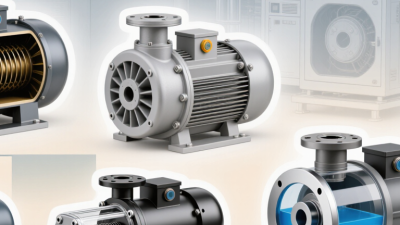
Digital twins and simulation help teams test heat, vibration, and load before building full production runs. For example, a simulated pump housing can reveal stress around bolt holes under repeated pressure. The model is only as reliable as its inputs. Real measurements from sensors and physical tests should refine assumptions, not merely confirm them. Small errors matter.

Manufacturing choices shape the design, too. Additive manufacturing suits intricate, low-volume components, while CNC machining can provide dependable dimensions and smooth sealing surfaces. Design-for-manufacture reviews help catch awkward tool access or tolerances that drive up cost. A prototype may fit perfectly in CAD and still vibrate on a test bench. That gap deserves attention. Teams should document test conditions, failure points, and revisions so results remain traceable. Some projects still need slower, hands-on iteration; automation cannot resolve every unclear requirement.

How Custom Engineering Solutions Are Designed and Validated

Custom engineering solutions are designed around measurable operating needs, not attractive drawings alone. Engineers translate user requirements into load limits, temperature ranges, service life, and maintenance access. A machinist may flag a tool clearance issue before the first prototype. Small details matter.

Teams then compare concepts using calculations, simulations, and build reviews. McKinsey’s 2023 research found that 70% of surveyed C-suite technology executives at large enterprises were exploring or investing in digital twins. That figure reflects growing interest, not proof that every virtual model predicts real performance. Models can still be wrong. Teams should document assumptions and update them when test results disagree.

Validation begins with acceptance criteria agreed before fabrication. Engineers test prototypes under realistic loads, vibration, heat, and repeated use, then record failures and corrective changes. In a 2019 Deloitte–MAPI study, 86% of surveyed manufacturers expected smart factory initiatives to drive competitiveness within five years. This supports investment in connected production, but validation still depends on sound test design. A sensor reading alone is not enough. Teams should compare measurements against calibrated instruments, inspect wear, and repeat critical tests. Some projects still rush this stage; that deserves reflection. A clear test record helps customers assess performance, maintenance needs, and remaining uncertainty.

What Are the Best Custom Engineering Solutions in 2026? — How Custom Engineering Solutions Are Designed and Validated

“Best” depends on the application’s requirements, risks, operating environment, and lifecycle cost. The examples below summarize common solution types and recognized validation methods. Acceptance limits should be defined for each project; test standards generally describe procedures and do not establish universal product pass limits.

Custom solution Typical design inputs How the solution is designed Practical validation methods Project acceptance evidence
Custom mechanical components and assemblies Loads, motion, interfaces, operating temperature, expected service life, available materials, and manufacturing constraints. Translate requirements into a 3D CAD model and drawings; apply tolerances and datum references; assess strength, stiffness, fit, and assembly sequence; review manufacturability. Dimensional inspection; fit and functional checks; load or fatigue testing where required. ASME Y14.5 provides practices for geometric dimensioning and tolerancing; ASTM E8/E8M describes tensile testing of metallic materials. Inspection results meet drawing tolerances; measured performance meets project-defined load, deflection, motion, and durability requirements.
Automated equipment and custom machinery Required cycle time, payload, work envelope, process variation, operator interaction, guarding, and maintenance access. Define process sequence and system interfaces; select actuators, sensors, controls, and guarding; assess machinery hazards; develop a test plan for normal and fault conditions. Factory and site acceptance tests; interlock and emergency-stop checks; repeatability and cycle-time trials. ISO 12100 addresses machinery risk assessment and risk reduction; ISO 13849-1 addresses safety-related parts of control systems. Documented hazard controls; verified safety functions; demonstrated cycle time, repeatability, and operating sequence against project requirements.
Thermal management and fluid systems Heat load, ambient conditions, pressure and flow range, fluid properties, allowable temperature, and installation space. Establish heat and mass balances; size passages, pumps, fans, or heat exchangers; evaluate pressure drop and thermal behavior; account for service and leak detection. Instrumented thermal-soak and transient tests; flow and pressure measurements; leak and pressure tests using procedures appropriate to the system and applicable codes. Temperatures, flow rates, pressure losses, and leakage remain within project-defined limits across specified operating conditions.
Embedded control and sensing systems Inputs and outputs, response time, environmental exposure, power budget, communications, fault behavior, and applicable safety requirements. Define system architecture and interfaces; implement control logic; analyze failure modes; design for diagnostics, maintainability, and verification at unit and system level. Code and interface tests; hardware-in-the-loop or system simulations where suitable; environmental and electromagnetic compatibility testing to applicable product standards. Requirements traceability; test records for normal, boundary, and fault cases; response times and measurement accuracy within project-defined tolerances.
Materials and corrosion-resistant designs Strength, wear, chemical exposure, temperature, moisture, manufacturing process, joining method, and expected maintenance interval. Compare candidate materials and surface treatments; review compatibility with the service environment; design joints and finishes to reduce wear, corrosion, and contamination risks. Material certificates and property tests; exposure testing selected for the real environment. ISO 9227 specifies salt-spray corrosion tests, but results do not directly predict service life in every environment. Verified material and process records; test results meet project-defined property and exposure criteria; service-life assumptions are documented.
Integrated prototype-to-production engineering Product requirements, expected production volume, supply-chain capability, inspection strategy, service needs, and change-control process. Build and review prototypes; resolve design and manufacturing issues; define production drawings, inspection points, assembly instructions, and configuration control before release. Design reviews; pilot builds; process and product inspections; verification against requirements. ISO 9001 provides requirements for a quality management system, not a guarantee of product performance. Approved drawings and revisions; completed verification records; controlled build process; documented resolution of nonconformities before production release.

Applications Across Major Industries

What Are the Best Custom Engineering Solutions in 2026?

Applications Across Major Industries

Custom engineering works best when it solves a specific operating problem, not just a technical one. In manufacturing, tailored fixtures and automated inspection systems can reduce handling errors and keep production consistent. A sensor might detect a misaligned part before it reaches the next station. Small details matter.

In food processing, corrosion-resistant equipment and easy-to-clean surfaces help support reliable sanitation routines. The right design depends on the product, cleaning method, and pace of production.

Healthcare facilities use custom carts, ergonomic tools, and equipment mounts to improve workflow in crowded rooms. In energy and construction, engineered monitoring systems can track vibration, temperature, or structural movement. These solutions need to suit real conditions, including dust, moisture, and limited maintenance access.

A design may look elegant on screen and still prove awkward on a busy factory floor. That gap deserves careful testing, not a quick assumption.

Tips: Define the problem with people who use the equipment every day. Share dimensions, operating temperatures, cleaning needs, and maintenance limits early. Test a prototype under realistic conditions, then record what fails or feels inconvenient. A little rework is normal. Good engineering leaves room for it.

How to Evaluate and Select an Engineering Solution

Choosing an engineering solution starts with defining the problem in measurable terms. Record loads, temperatures, duty cycles, available space, and required output before reviewing proposals. Ask providers to show how each design meets those conditions, not just describe its features. Specifics matter. Request drawings, material data, interface dimensions, and the assumptions behind performance estimates. Compare options using the same test conditions; otherwise, attractive numbers may conceal mismatched operating limits.

Evaluate how the solution will be built, installed, monitored, and maintained. Check tolerances, tool access, replacement intervals, and the availability of critical components. Ask what evidence supports reliability claims, such as calculations or prototype test results. Where uncertainty remains, define a small validation trial with clear pass-or-fail criteria before committing to full production. That costs time. Yet skipping it can create expensive rework, especially when a system must fit an existing line or enclosure. Score proposals for technical fit, lifecycle cost, delivery risk, and support quality. One caveat: scores can look precise while relying on rough estimates. Document assumptions and revisit them when actual measurements arrive.