Choosing a reliable pump manufacturer is not a minor purchasing decision. It affects production continuity, maintenance budgets, worker safety, and customer trust. A pump may operate quietly for years, yet one poorly selected component can stop an entire processing line within minutes.
Pump-industry educator Joe Evans, Ph.D., offers a practical reminder: “A pump is only reliable when the complete system is reliable.” That principle matters to global buyers. A dependable supplier should understand flow rate, head pressure, fluid temperature, corrosion, seal selection, motor efficiency, and local operating conditions. Technical brochures alone are not enough. Buyers need tested performance data, traceable materials, clear installation guidance, and responsive after-sales support.
Look beyond the factory gate.
An experienced pump manufacturer documents quality controls from casting and machining to pressure testing and final inspection. It should explain tolerance limits instead of hiding behind broad claims. It should also provide spare parts, troubleshooting support, and realistic delivery schedules. These details become especially important when equipment crosses borders and replacement delays can last weeks.
Still, no manufacturer is perfect. Even strong suppliers may face material shortages, communication gaps, or unexpected field failures. That reality deserves honest discussion. Global buyers should review references, request sample test reports, confirm warranty terms, and assess service capacity before signing a contract. A lower purchase price can become expensive after repeated seal failures or excessive energy consumption.
The best partnership is not built on promises alone. It grows through transparent engineering, consistent communication, and measurable performance. That is why choosing the right pump manufacturer can protect both today’s operation and tomorrow’s investment.
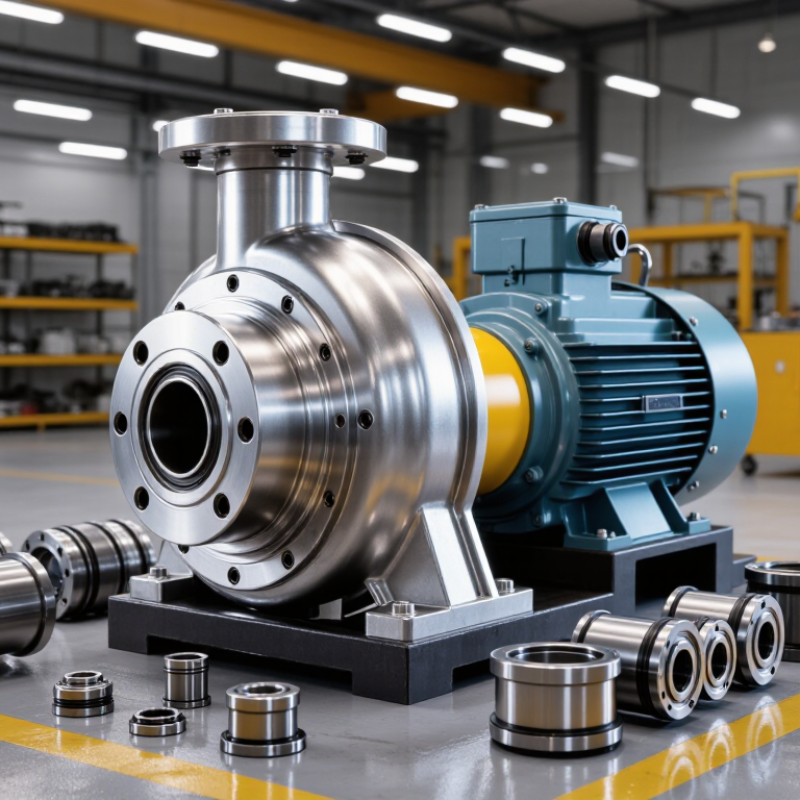
Pumps consume about 10% of global electricity, according to widely cited industry estimates. That figure makes manufacturer reliability an energy concern, not only a purchasing concern. An inefficient pump may waste power every hour. Small losses become expensive across water systems, factories, and agricultural facilities.
Reliable manufacturers provide verified performance curves, material records, and clear testing data. These details help buyers compare flow, head, efficiency, and service life.
Field teams should also inspect vibration levels, seal quality, bearing temperature, and control compatibility. A pump that performs well in a catalog may behave differently after installation. That reality deserves honest attention. Even careful selection can miss local water conditions or unexpected load changes.
Tips: Ask for factory test results, energy-efficiency data, spare-parts guidance, and maintenance instructions. Confirm the pump’s performance at your actual operating point. Check communication response and warranty terms before shipment. A dependable manufacturer should explain limitations clearly, not hide them behind impressive specifications. This process may take longer. It can prevent costly downtime, repeated replacements, and unnecessary electricity use.
ISO 9906 testing turns pump claims into measurable evidence. It compares flow, head, power, and efficiency under controlled conditions. A serious manufacturer records suction pressure, liquid temperature, rotational speed, and instrument uncertainty. Small errors matter. A few metres of head can change a system’s operating point.
The U.S. Department of Energy reports that pumping systems consume about 25% of industrial electricity. The IEA also identifies motor-driven systems as major global electricity users. This makes hydraulic efficiency a purchasing issue, not a laboratory detail. ISO 9906 acceptance grades help buyers compare tested performance with guaranteed values. Test certificates should show the selected grade, calibration status, test medium, and complete performance curves. Missing details weaken confidence.
Field experience still exposes uncomfortable gaps. A pump may pass a factory test but perform poorly after poor pipe sizing, air ingress, or unstable voltage. That is why reliable manufacturers repeat checks and explain deviations instead of hiding them. Buyers should ask for raw readings, not only a polished certificate. Sometimes, the paperwork looks perfect. The system does not. Data from the U.S. DOE Pumping System Assessment Tool and ISO 9906-based testing can guide better decisions, but engineers must still verify actual site conditions.
Why Choose a Reliable Pump Manufacturer for Global Buyers?
Pump price is only one part of the investment. Energy, maintenance, downtime, and replacement costs often dominate the lifecycle bill. The U.S. Department of Energy reports that properly optimized pumping systems can reduce energy use by 20–50%. That range is significant. However, savings are never automatic. A pump must match the actual flow, head, fluid, and operating schedule. Oversized equipment may run safely while wasting electricity through throttling and bypass flow.
Independent energy research strengthens this concern. The International Energy Agency estimates that electric motor systems consume about 53% of global electricity. Pumps represent a major share of these motor-driven loads in industry and buildings. A reliable manufacturer should provide tested efficiency curves, clear duty-point data, and practical commissioning support. Field measurements matter. Pressure gauges, flow meters, and motor readings can expose losses that brochures rarely show.
Lifecycle analysis also rewards dependable engineering. Better seals, corrosion-resistant materials, accessible bearings, and locally available spare parts can reduce unplanned shutdowns. Yet even strong designs can fail when operators ignore maintenance or operate far from the best-efficiency point. This is where global buyers need honest guidance, not optimistic promises. A manufacturer willing to review operating data, explain assumptions, and document performance offers greater value than the lowest initial quotation. Some savings estimates may look impressive. They still deserve verification.
| Lifecycle Cost and Performance Metric | Conventional Pump System | Efficient Pump System | Difference | Calculation Basis |
|---|---|---|---|---|
| Reference Operating Conditions | ||||
| Rated motor power | 30 kW | 30 kW | — | Common industrial pump motor rating |
| Average operating load | 70% | 70% | — | Load profile used for comparison |
| Operating schedule | 6,000 hours/year | 6,000 hours/year | — | Approximately 16.4 operating hours per day |
| Electricity tariff | US$0.12/kWh | US$0.12/kWh | — | Illustrative industrial electricity rate |
| Evaluation period | 10 years | 10 years | — | Excludes discounting, taxes, and inflation |
| Energy Efficiency and Operating Cost | ||||
| Estimated annual electricity consumption | 126,000 kWh | 88,200 kWh | 37,800 kWh lower | Efficient system modeled at 30% lower energy use |
| Energy-use reduction | Baseline | 30% | Within the 20–50% potential range | Actual savings depend on sizing, controls, duty cycle, and hydraulics |
| Annual electricity cost | US$15,120 | US$10,584 | US$4,536/year | Annual consumption × electricity tariff |
| Ten-year electricity cost | US$151,200 | US$105,840 | US$45,360 saved | Annual electricity cost × 10 years |
| Acquisition, Maintenance, and Lifecycle Cost | ||||
| Initial pump-system purchase and installation | US$24,000 | US$28,000 | US$4,000 higher | Illustrative installed cost for comparable duty |
| Average annual maintenance cost | US$3,000 | US$2,250 | US$750/year lower | Based on improved reliability and preventive maintenance planning |
| Ten-year maintenance cost | US$30,000 | US$22,500 | US$7,500 saved | Average annual maintenance cost × 10 years |
| Expected downtime allowance over 10 years | US$12,000 | US$6,000 | US$6,000 lower | Illustrative production-loss allowance; site-specific |
| Estimated ten-year lifecycle cost | US$217,200 | US$162,340 | US$54,860 saved | Purchase + energy + maintenance + downtime allowance |
| Lifecycle-cost reduction | Baseline | 25.3% | US$54,860 | Compared with the conventional system over 10 years |
| Simple payback on additional investment | Not applicable | Approximately 0.75 years | About 9 months | US$4,000 additional investment ÷ US$5,286 annual operating benefit |
| Environmental and Procurement Considerations | ||||
| Electricity saved over 10 years | — | 378,000 kWh | 378,000 kWh | Compared with the conventional system |
| Indicative CO₂ reduction over 10 years | — | Approximately 170 metric tons | Approximately 170 metric tons | Using an illustrative grid factor of 0.45 kg CO₂e/kWh |
| Recommended buyer verification documents | Performance curve and warranty | Performance curve, efficiency data, testing records, warranty, spare-parts plan | More complete technical evidence | Supports lifecycle-cost validation and international procurement |
For global buyers, pump selection begins long before a quotation arrives. A reliable manufacturer provides evidence that equipment can enter, operate, and remain supportable in the destination market. That evidence should be specific. Ask for the exact model, test standard, certificate scope, issue date, and production traceability. A scanned logo is not enough.
CE compliance can show that a pump meets applicable European health, safety, and environmental requirements. It is not a universal quality mark, and the declaration must match the actual configuration. UL certification or recognition may support electrical safety acceptance in North American applications. Buyers should check the file number, covered components, ratings, and installation conditions. Small differences matter. Voltage, enclosure rating, cable entries, and motor protection can change compliance needs.
ISO 9001 addresses the manufacturer’s quality management system, not automatic pump performance. Its value appears in controlled drawings, supplier checks, calibrated instruments, corrective actions, and batch records. During a factory review, request sample inspection reports and follow one serial number through assembly and testing. No system is flawless. Even audited factories make mistakes. Certificates can age, and specifications may remain incomplete. A missing test record deserves a direct explanation before payment terms are discussed.
For global buyers, a pump quote is only the starting point. A reliable manufacturer should explain what its warranty covers, excludes, and requires. Ask whether coverage includes seals, bearings, controls, and labor. Request written response times for claims. A two-year warranty sounds strong, but it means little if spare parts take months to arrive. Small details matter.
Lead time should be checked against real production capacity, not a sales promise. Ask for a stage-by-stage schedule, including testing, packing, export documents, and inspection. Compare quoted lead times with recent delivery records. I once focused too heavily on price and accepted an optimistic date. The pump arrived late, and installation crews remained idle. That mistake changed my evaluation process.
MTBF can help compare designs, but buyers should examine the test method and operating assumptions. A figure without load, fluid, temperature, and maintenance conditions is incomplete. Service availability matters just as much. Confirm local technicians, remote troubleshooting hours, language support, and emergency parts stock. Ask for customer references in similar climates or industries. Records may be imperfect, and suppliers may not answer every question well. That hesitation itself deserves attention before a purchase order is issued.