Global buyers are paying closer attention to ac blower performance, efficiency, and supplier reliability. The reason is practical. Building operations consume about 30% of global final energy, according to the International Energy Agency’s Global Status Report for Buildings and Construction. Air movement equipment can therefore influence operating costs, comfort, and carbon performance.
Recent analyses from Grand View Research and Fortune Business Insights identify energy efficiency, smart controls, and equipment replacement as major HVAC market drivers. These trends affect blower manufacturers directly. Buyers now examine electronically commutated motors, variable-speed control, airflow stability, sound levels, and thermal protection. A compact blower may look attractive, yet poor bearings or weak quality control can create expensive failures.
This guide reviews China’s top 10 ac blower manufacturers for international buyers. The selection considers product range, manufacturing experience, testing capability, export history, certifications, customization, and after-sales support. Relevant requirements may include ISO 9001 systems, CE compliance, RoHS documentation, and application-specific performance testing. Certification alone is not enough.
Real performance depends on the complete assembly. Fan curves, static pressure, motor efficiency, vibration, and installation conditions must be checked together. Buyers should request test reports, sample units, noise data, and warranty terms before placing large orders. Supplier rankings are never perfectly objective. Some manufacturers disclose limited data, while others serve highly specialized markets. That limitation deserves attention.
The companies discussed here represent different strengths, including residential HVAC, commercial ventilation, refrigeration, and industrial air movement. Their capabilities may change with new product lines, factory upgrades, or regional regulations. Careful verification remains essential. Each supplier should be matched with the buyer’s airflow targets, voltage requirements, climate conditions, and long-term service expectations.
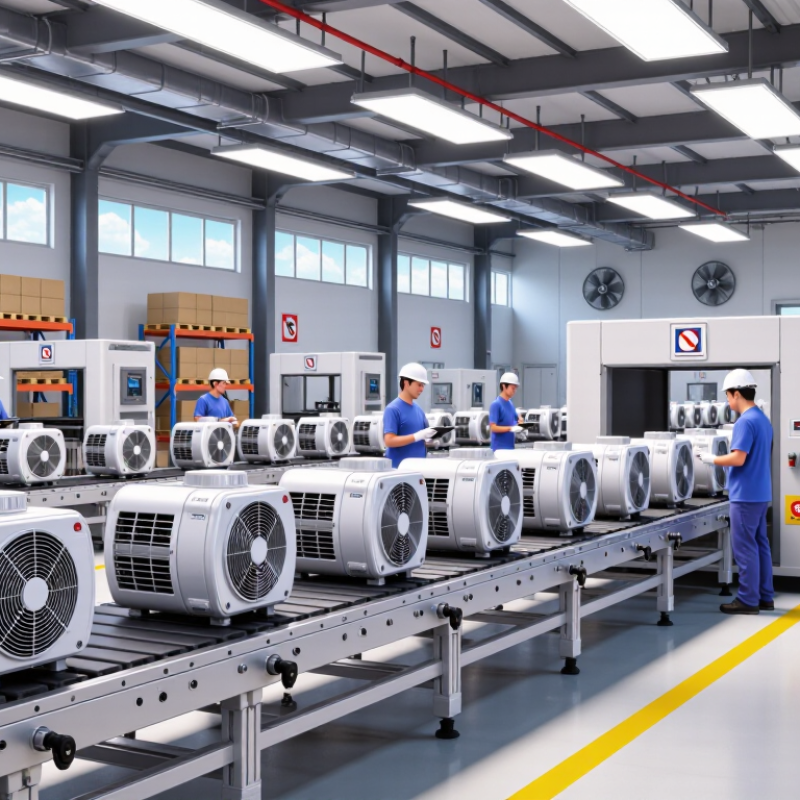
An AC blower is the air-moving assembly inside an air-conditioning or heat-pump system. It usually includes a centrifugal fan wheel, motor, housing, and control components. Unlike a simple axial fan, it pushes air through filters, coils, ducts, and grilles. This creates the static pressure required for stable indoor airflow.
Global buyers need AC blowers that match real operating conditions, not only catalog dimensions. A unit may fit physically but fail under high resistance. Airflow, static pressure, motor speed, voltage, frequency, noise, and energy efficiency all require checking. In a coastal installation, corrosion protection matters. In a hotel room, vibration and sound become critical. Small differences can affect comfort, electricity use, and service life.
China’s top ten AC blower manufacturers are often compared for customization, production capacity, and export experience. Buyers should request performance curves, motor insulation details, balance-test records, and sample units before approving bulk orders. I have seen low-cost blowers perform well in open-air tests but weaken after filters and coils were installed. That gap deserves attention. A reliable supplier should explain test conditions, provide traceable quality records, and support voltage or mounting adjustments. Compliance documents must also match the destination market. Experience helps, but assumptions still cause expensive mistakes.
Choosing among China’s top AC blower manufacturers requires more than comparing catalog prices. Start by matching the blower to your system’s airflow, static pressure, voltage, and installation space. Ask for performance curves based on tested data, not estimates. A reliable supplier should explain how readings were collected.
Request a sample unit before placing a large order. Check airflow at several pressure points, motor temperature, vibration, and operating noise. A quiet showroom sample proves little. Test it inside a housing that resembles your final equipment. Small gaps can change results.
Confirm bearing type, impeller balance, insulation rating, and expected service life. Review inspection records and traceability for motors, capacitors, and wiring.
Factory evaluation matters too. Look for controlled assembly areas, calibrated instruments, and technicians who can discuss failure causes clearly. Ask how they handle abnormal noise, delayed shipments, and rejected batches. Their answer often reveals more than a polished presentation. Verify production capacity, packaging methods, warranty terms, and technical support in writing. Certifications should match your destination market and product configuration. Do not accept copied documents without checking model numbers and test dates. My own mistake was trusting a low quoted price before calculating tooling, testing, and replacement costs. A cheaper blower can become expensive when airflow drops after installation. Communication may also be imperfect, so detailed drawings and signed specifications are essential.
For international buyers, China’s top 10 AC blower manufacturers should be assessed as a qualified shortlist, not a simple popularity ranking. The International Energy Agency’s The Future of Cooling report states that space-cooling energy demand has more than tripled since 1990. It could triple again by 2050. This pressure makes motor efficiency, airflow stability, and serviceability important commercial priorities. Buyers should request ISO 5801 airflow results, motor input data, sound levels, and endurance records. Numbers matter more than polished catalogs.
A credible manufacturer usually provides centrifugal blower options, efficient AC or EC motors, corrosion-resistant housings, and metric engineering drawings. Ask for operating curves at the required static pressure, not maximum airflow alone. U.S. Department of Energy research shows that fan efficiency depends heavily on system design and control. A high airflow rating can mislead. Check samples at both 50 Hz and 60 Hz when equipment will serve different markets. Small details matter.
For the final ten-company comparison, verify factory testing, traceability, export packaging, warranty response, and compliance documentation. Independent inspections can confirm vibration, insulation, temperature rise, and repeated-start performance. I would also review replacement-part lead times before accepting a low quotation. A cheaper blower becomes expensive when equipment waits at a port. The shortlist will never be perfect; application data, not company size, should guide the purchase.
Global buyers comparing China’s top ten AC blower manufacturers should examine products beyond rated airflow. Common offerings include forward-curved centrifugal blowers, backward-curved impellers, cross-flow fans, and axial assemblies. EC and BLDC motors now support variable-speed control, lower standby losses, and quieter operation. PWM, 0–10 V, and Modbus interfaces help match airflow with real demand. However, control compatibility is often overlooked. A blower may perform well in a test chamber but fail during field integration.
Industry applications vary widely. Split air conditioners need compact, low-noise units with stable airflow. Rooftop systems and air-handling units require corrosion resistance, vibration control, and reliable continuous operation. Heat pumps benefit from efficient motors during frequent speed changes. Cleanrooms and medical facilities demand balanced impellers, sealed bearings, and strict airflow consistency. Data centers require redundancy and accurate thermal management. The International Energy Agency’s Energy Efficiency 2023 report states that buildings consume about 30% of global final energy, making fan efficiency commercially important. ASHRAE guidance also emphasizes system-level testing, not motor efficiency alone.
Buyers should request airflow curves, sound data, efficiency maps, insulation ratings, and endurance-test results. Ask for samples. Check performance at partial load. One weakness remains: published figures may use different test conditions, so direct comparisons can mislead. Factory audits, traceable materials, and documented quality procedures improve reliability. Field experience suggests that a slightly less powerful blower can deliver better results when duct resistance, controls, and maintenance access are properly considered.
| Profile | Primary AC Blower Products | Typical Airflow Range | Typical Static Pressure | Motor and Drive Options | Key Technologies | Common HVAC Applications | Applicable Standards and Testing | Export and Customization Capabilities |
|---|---|---|---|---|---|---|---|---|
| Manufacturer Profile 01 | Centrifugal blowers Forward-curved fans Double-inlet assemblies | 800–18,000 m³/h | 80–900 Pa | Single-phase or three-phase AC motors; capacitor-run motors; optional thermal protection | Galvanized-steel housings, dynamically balanced impellers, low-noise scroll design | Fan-coil units, packaged air conditioners, air-handling units, commercial ventilation | CE-oriented design; airflow, noise, vibration, insulation, and dielectric-strength testing | OEM mounting patterns, shaft and impeller customization, export packing for container shipment |
| Manufacturer Profile 02 | EC centrifugal blowers Backward-curved fans Plug fans | 500–25,000 m³/h | 100–1,200 Pa | Electronically commutated motors; integrated speed control; 0–10 V and PWM interfaces | High-efficiency EC motor technology, closed-loop speed regulation, electronically controlled airflow | Energy-saving AHUs, data rooms, precision cooling, heat-recovery ventilation systems | Performance testing across operating points; EMC, motor temperature, and endurance evaluation | Metric and imperial mounting options; controller programming; multi-voltage configurations |
| Manufacturer Profile 03 | Cross-flow fans Tangential blowers Compact fan modules | 100–3,500 m³/h | 20–250 Pa | Shaded-pole or PSC motors; compact single-phase configurations | Long cylindrical rotors, molded polymer end supports, compact airflow distribution | Wall-mounted air conditioners, air curtains, fan-coil units, display and cabinet cooling | Electrical safety, airflow, acoustic, rotor-balance, and temperature-rise testing | Cut-to-length fan wheels, customized lead wires, connector selection, private-label packaging excluded |
| Manufacturer Profile 04 | Backward-inclined blowers Belt-drive fan sections Industrial centrifugal fans | 2,000–60,000 m³/h | 300–2,500 Pa | Three-phase induction motors; direct-drive or belt-drive arrangements; inverter-compatible options | Heavy-duty welded frames, replaceable bearings, corrosion-resistant coatings, serviceable housings | Large AHUs, factory ventilation, clean manufacturing areas, evaporative cooling systems | Fan curve verification, vibration measurement, motor insulation, structural and coating inspection | Skid-mounted units, custom discharge orientation, regional voltage and frequency adaptation |
| Manufacturer Profile 05 | Forward-curved blowers Multi-speed fan motors Compact HVAC fan decks | 600–12,000 m³/h | 60–700 Pa | PSC motors with selectable speeds; thermal overload protection; optional speed regulators | Low-profile scrolls, galvanized components, optimized blade geometry for residential acoustics | Residential air handlers, ducted split systems, heat pumps, ventilation cabinets | Air-volume, sound-power, current-draw, dielectric, and locked-rotor testing | Small-batch engineering support, customized fan curves, wiring harness and bracket options |
| Manufacturer Profile 06 | Plug fans EC fan arrays Modular blower walls | 1,500–45,000 m³/h | 200–1,800 Pa | EC motors with integrated electronics; Modbus or 0–10 V control options | Fan-array redundancy, variable-speed control, sensor feedback, high-efficiency impellers | Hospitals, laboratories, cleanrooms, office towers, data-center cooling systems | Air performance mapping, EMC evaluation, control-interface testing, vibration and reliability tests | Parallel fan configuration, BMS integration support, modular replacement and maintenance design |
| Manufacturer Profile 07 | Duct fans Mixed-flow blowers Inline ventilation fans | 400–10,000 m³/h | 100–850 Pa | AC induction or EC motors; variable-speed controllers; optional integrated protection | Compact cylindrical casings, quick-install terminals, sealed motor compartments, efficient guide vanes | Residential duct ventilation, commercial exhaust, fresh-air systems, kitchen and bathroom ventilation | Airflow and pressure testing, noise testing, ingress protection assessment, electrical safety checks | Round and rectangular duct compatibility, custom flanges, regional power-supply configurations |
| Manufacturer Profile 08 | Heat-pump blowers Outdoor-unit fan modules Axial-centrifugal assemblies | 1,000–20,000 m³/h | 50–600 Pa | AC or EC motors; outdoor-rated insulation; overload and stall protection | Weather-resistant coatings, balanced rotors, low-temperature bearing grease, compact outdoor packaging | Air-source heat pumps, condensing units, rooftop equipment, air-cooled chillers | Temperature-cycle, humidity, salt-spray, vibration, sound, and electrical endurance testing | Outdoor enclosure adaptation, custom airflow direction, cold-climate and high-humidity configurations |
| Manufacturer Profile 09 | High-pressure centrifugal fans Industrial blowers Custom impeller units | 1,000–35,000 m³/h | 800–3,500 Pa | Three-phase motors; inverter-duty options; direct-drive and belt-drive systems | Reinforced impellers, wear-resistant surfaces, high-pressure scrolls, bearing temperature monitoring | Industrial air handling, process cooling, combustion-air supply, filtration and dust-control systems | Fan curve validation, overspeed testing, vibration grade checks, motor and bearing inspection | Application-based impeller selection, custom pressure targets, equipment-interface engineering |
| Manufacturer Profile 10 | Low-noise blower modules Fan-coil blowers Replacement assemblies | 300–8,000 m³/h | 40–500 Pa | PSC, shaded-pole, or EC motor options; multi-speed and remote-control configurations | Acoustic insulation, vibration-isolation mounts, optimized scroll clearances, plug-and-play wiring | Hotels, residential HVAC, office fan coils, air purifiers, compact air-handling equipment | Noise, airflow, vibration, current, insulation-resistance, and continuous-operation testing | Replacement compatibility checks, custom brackets, connector layouts, carton and pallet optimization |
Selecting the right Chinese AC blower supplier requires more than comparing quoted prices. Start with the blower’s operating conditions: airflow, static pressure, voltage, frequency, noise limit, and installation space. Share a clear technical sheet with every supplier. Small missing details can create large performance differences.
Ask for motor data, insulation class, bearing type, impeller material, and expected service life. Request airflow and pressure test reports from a calibrated laboratory. A factory should explain its testing method, not only send a polished certificate. Review production samples before placing a bulk order. Check vibration at different speeds, especially near the upper operating range. It may reveal an unbalanced impeller or weak housing. Ask about incoming inspection, winding checks, final testing, packaging, and traceability. Photos help, but an online factory audit is stronger evidence.
Communication is another practical test. Send the same questions to several suppliers and compare the precision of their replies. Reliable teams identify risks instead of promising everything. Confirm lead time, spare parts, warranty handling, and technical support in writing. A supplier with a low minimum order may still lack stable quality control. My checklist is not perfect; field conditions often expose assumptions missed during sampling. For that reason, test the blower inside the actual air system, using the planned duct length and filter resistance. Keep records of temperature, current, airflow, sound, and vibration. That evidence supports a safer purchasing decision.
A practical buyer evaluation model for comparing AC blower suppliers. The weighting prioritizes airflow performance, product reliability, compliance, customization capability, and total procurement cost.
Use these weights as a screening framework, then verify test reports, operating-point data, noise measurements, quality-system certificates, sample consistency, and after-sales support before placing an order.