Why Choose a Rotary Vane Vacuum Pump?
When a process depends on a steady vacuum, the pump choice affects more than the gauge reading. It can shape cycle time, product quality, maintenance workload, and energy use. A rotary vane vacuum pump is a common choice for its compact design and dependable performance in routine applications. In workshops, laboratories, packaging lines, and service bays, these pumps can support evacuation, drying, degassing, and holding tasks. The details matter. Pump capacity, ultimate pressure, vapor load, and duty cycle should match the actual process, not just the equipment label.
Many rotary vane models use oil to seal and lubricate the pumping chamber. This can help create a consistent vacuum and support extended operation. But oil management takes attention. Exhaust filtration, oil condition, ambient temperature, and gas compatibility all influence performance. A pump that sounds quiet in a catalog may feel different beside a production line. That is worth checking. This guide explores why users choose this design, where it performs well, and which trade-offs deserve a closer look. It also considers maintenance access, operating costs, and selection questions that can be easy to miss during purchasing. No pump fits every process. The right choice depends on measurable requirements and realistic service expectations. There are limits, too.
What a Rotary Vane Vacuum Pump Is
Why Choose a Rotary Vane Vacuum Pump?
What a Rotary Vane Vacuum Pump Is
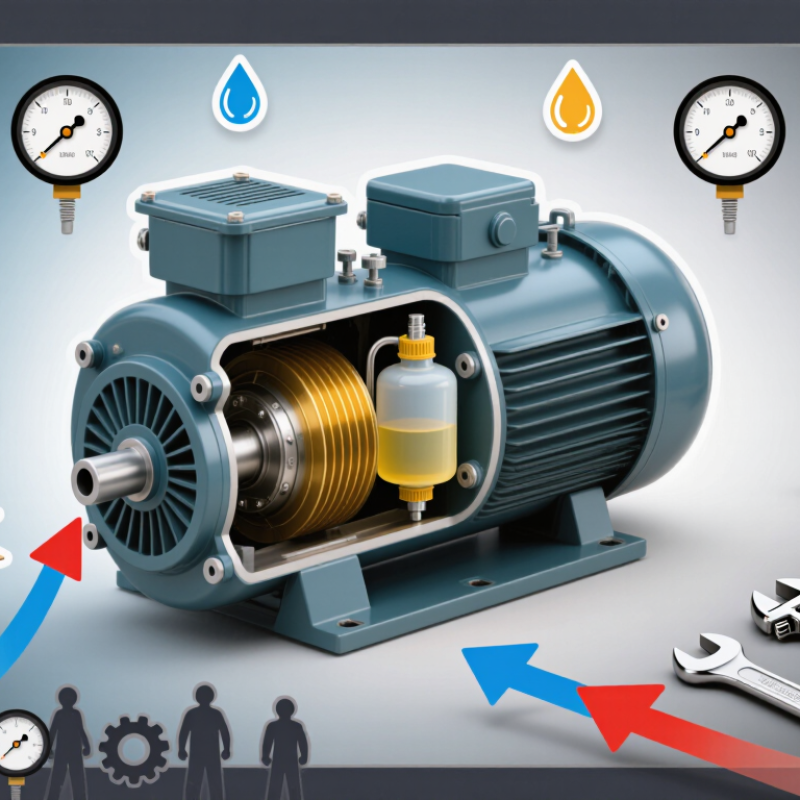
A rotary vane vacuum pump is a positive-displacement pump that removes gas from a sealed space. Inside its housing, an offset rotor turns with sliding vanes in narrow slots. As the rotor spins, the spaces between the vanes expand to draw in gas, then shrink to push it toward the exhaust. Oil typically seals the moving parts, reduces friction, and carries away heat. You can often hear the steady hum and feel warmth near the casing during operation. That warmth matters.
The European Commission’s preparatory study on vacuum pumps describes oil-sealed rotary vane designs as a common rough-vacuum technology. Its technical assessment indicates that two-stage models can reach pressures around 10⁻³ mbar, though actual performance depends on design, gas load, and maintenance. This makes them useful for tasks such as laboratory drying and vacuum packaging. They are not ideal for every process: oil condition, vapor exposure, and exhaust filtration all affect performance. Small details count.
Tips: Check the oil level and exhaust filter regularly, and follow the maker’s service interval. If the pump struggles to reach its usual pressure, inspect for leaks before assuming the pump has failed. A worn seal can be easy to miss.
How Rotating Vanes Create a Vacuum
Why Choose a Rotary Vane Vacuum Pump?
How Rotating Vanes Create a Vacuum
A rotary vane pump lowers pressure by moving gas out of a sealed chamber. Inside, a rotor turns off-center within a cylindrical housing. Sliding vanes sit in slots in the rotor and extend toward the housing wall. As the rotor spins, the vanes form several small chambers. A simple cycle.
Near the inlet, a chamber grows larger. Its pressure falls, allowing gas to flow in from the connected system. The chamber then travels around with the rotor and becomes smaller. This compresses the trapped gas before it leaves through the exhaust. The pump does not make a perfect empty space; it keeps removing gas until the system reaches its operating pressure.
The details matter. In an oil-sealed design, oil helps seal tiny gaps and carry away heat, but it needs regular attention. Dry designs avoid oil in the pumping chamber, though their materials and operating limits differ. In practice, leaks, moisture, temperature, and maintenance can all affect performance. A smooth sound is reassuring, but it is not a pressure reading. Use a suitable gauge and check the pump under the actual load. The mechanism is straightforward; choosing the right conditions is less so.
Key Performance Characteristics and Operating Limits
Why Choose a Rotary Vane Vacuum Pump?
Key Performance Characteristics and Operating Limits
A rotary vane vacuum pump uses sliding vanes to trap and compress gas before exhausting it. Its steady pumping action suits many laboratory and industrial vacuum tasks. Pumping speed matters, but it does not stay constant across the full pressure range. As pressure falls, evacuation often slows. A readable gauge helps reveal that change.
The lowest achievable pressure depends on pump design, oil condition, temperature, and system leaks. Water vapor can also limit performance. Gas ballast may help remove condensable vapor, though it can reduce the final vacuum. Contaminated oil is easy to overlook. It may cause rising pressure, sluggish starts, or excess noise. A pump’s stated limit is not a promise for every installation; fittings, hoses, and chamber cleanliness all matter.
Tips: Check oil level and clarity before operation, and follow the maker’s maintenance schedule. Keep the inlet line short and inspect seals for leaks. If the pump handles moist gas, use gas ballast as directed, then allow time for the system to dry. Small details matter. Recheck the gauge after servicing; an unexpected reading deserves investigation, not guesswork.
Common Applications of Rotary Vane Vacuum Pumps
Rotary vane vacuum pumps serve many everyday industrial tasks. In laboratories, they support vacuum filtration and rotary evaporation, drawing liquid through a filter while reducing pressure in the flask. Food processors use them in vacuum packaging, where removing air can help protect products during storage. Freeze-drying systems also use vacuum to help ice leave frozen material as vapor. The detail matters: moisture and process vapors can contaminate pump oil, so a gas ballast and regular oil checks may be necessary.
In manufacturing, these pumps provide rough vacuum for vacuum furnaces, coating equipment, and as backing pumps for higher-vacuum systems. The Semiconductor Industry Association reported global chip sales of $526.8 billion in 2023; many chip-production steps rely on controlled vacuum, though this figure measures sales, not pump use. The IEA’s Renewables 2024 report estimated 420 GW of solar PV capacity additions in 2023, another industrial setting where vacuum processes can support production. Not every process needs the same pressure. That distinction is easy to overlook. Rotary vane pumps are practical, but oil carryover, exhaust filtration, and compatibility with process gases deserve attention before installation. A pump that works well on a dry bench may struggle beside a warm, vapor-rich process.
Why Choose a Rotary Vane Vacuum Pump? - Common Applications of Rotary Vane Vacuum Pumps
| Application |
Typical Process Pressure |
Why a Rotary Vane Pump Is Used |
Key Considerations |
| Vacuum packaging |
Often around 1–10 kPa absolute, depending on the product and package |
Provides reliable rough vacuum for removing air from packaging chambers and supports frequent production cycles. |
Moisture and product vapors can contaminate pump oil; use suitable filtration and follow oil-maintenance guidance. |
| Refrigeration and air-conditioning service |
Evacuation commonly targets below 0.67 mbar (500 microns) before charging; requirements vary by system and procedure. |
Oil-sealed models can reach the low pressures used to remove air and moisture from sealed refrigeration circuits. |
Use clean, dry oil and appropriate hoses; verify vacuum with a suitable gauge rather than relying only on pump run time. |
| Vacuum filtration and laboratory work |
Commonly tens to hundreds of mbar absolute, depending on the apparatus |
Offers steady, practical vacuum for filtration, aspiration, and other routine laboratory tasks. |
Protect the pump from liquid carryover with a trap; confirm that process vapors are compatible with an oil-sealed pump. |
| Vacuum drying and degassing |
Often about 1–100 mbar absolute, with the required pressure depending on material and temperature |
Can remove air and vapors from chambers and materials for many small-scale or general-purpose processes. |
Water vapor and solvents may affect oil condition; use gas ballast where appropriate and check chemical compatibility. |
| Vacuum distillation |
May range from roughly 1 to 100 mbar absolute, depending on the process |
Provides rough vacuum for suitable distillation setups and can serve as a backing pump in multi-pump systems. |
Use condensers or traps to limit solvent vapor entering the pump; some processes require additional high-vacuum equipment. |
| Backing for high-vacuum systems |
Typically operates at rough-vacuum pressures upstream of a high-vacuum pump; the system determines the working range. |
Can provide the fore-vacuum needed by certain turbomolecular or diffusion pump systems. |
A rotary vane pump is generally not a substitute for a high-vacuum pump when the process requires much lower pressures. |
Pressure ranges are illustrative, not guaranteed pump limits. Actual performance depends on pump design, gas composition, system leakage, temperature, maintenance, and measurement method.
How to Choose a Pump for Your Requirements
Choosing a rotary vane vacuum pump starts with the process, not the advertised ultimate pressure.
Estimate the chamber volume, target pressure, and acceptable pump-down time; these define the pumping speed you need. A small sealed chamber used for occasional degassing may require less capacity than a large system opened between cycles. Measure the real load. Leaks, outgassing materials, and long hoses can slow evacuation, even when the pump rating looks generous. For vapor-producing processes, check the pump’s vapor tolerance and whether a gas ballast is needed.
Confirm that the pump’s materials and oil suit the gases, temperatures, and contamination expected. If moisture may enter, plan for oil checks and changes; cloudy oil is a warning, not a complete diagnosis. Check the operating pressure range, continuous-duty rating, exhaust filtration, noise, and service access before purchase.
Maintenance matters.
A pump tucked behind a hot cabinet may be harder to inspect than its specification sheet suggests. Catalog figures can mislead, so request performance data at your working pressure, not only the blank-off pressure. There is rarely a perfect selection from a catalog alone; actual load and maintenance habits deserve another look.