2026 Top Rotary Vane Vacuum Pump Types for Global Buyers

Choosing the right rotary vane vacuum pump in 2026 requires more than comparing catalog prices. Global buyers must examine vacuum level, pumping speed, oil compatibility, noise, service access, and operating temperature. A pump that performs well in a clean laboratory may struggle beside a warm packaging line. Context matters.

This guide introduces the main rotary vane vacuum pump types available for international applications. It considers single-stage and two-stage designs, direct-drive and belt-driven structures, oil-sealed systems, and compact models for limited installation spaces. Real purchasing decisions often depend on practical details, such as a 50 Hz or 60 Hz motor, local voltage, inlet size, and replacement seal availability. These small details can stop a project.

Reliable selection also requires evidence. Buyers should review certified performance curves, measured ultimate pressure, oil specifications, warranty terms, and technical support coverage. Experienced engineers know that advertised figures may change under different gas loads, temperatures, and maintenance conditions. That point is easy to overlook.

The discussion compares pump types by application, reliability, energy use, and total ownership cost. It also considers food packaging, laboratory equipment, vacuum drying, refrigeration service, and industrial processing. Some recommendations remain imperfect because every facility has different leakage rates, duty cycles, and operator skills. A careful review of site conditions is still necessary. In practice, the best pump is not always the strongest model. It is the model that delivers stable vacuum performance, safe operation, manageable maintenance, and dependable support across its working life.
2026 Top Rotary Vane Vacuum Pump Types for Global Buyers

What Is a Rotary Vane Vacuum Pump?

2026 Top Rotary Vane Vacuum Pump Types for Global Buyers

What Is a Rotary Vane Vacuum Pump?

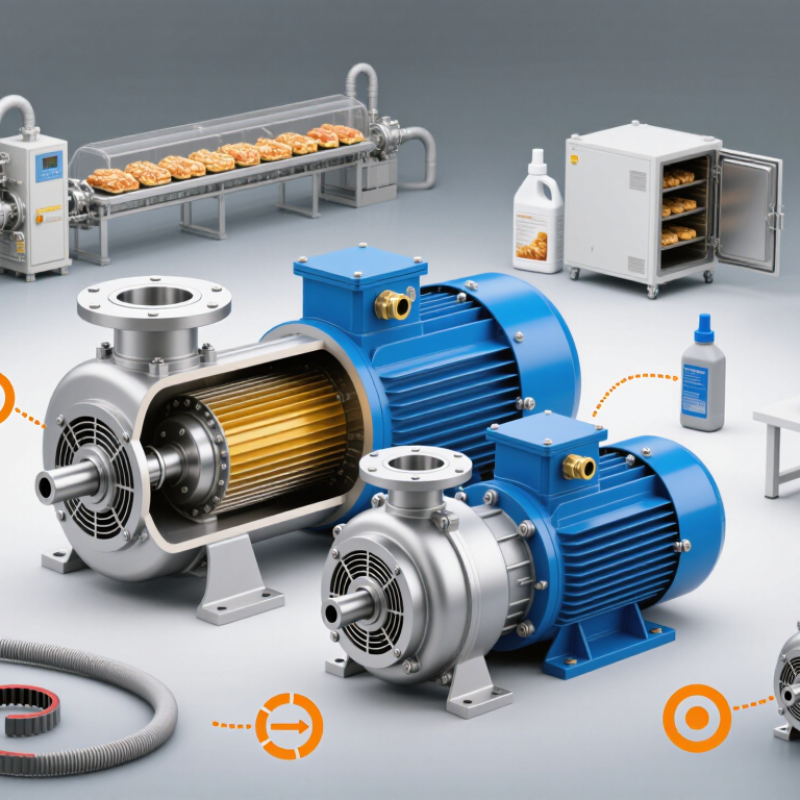
A rotary vane vacuum pump is a mechanical device that removes gas from a sealed chamber. It creates low pressure for packaging, drying, filtration, and laboratory processes. Inside its housing, an offset rotor carries sliding vanes. These vanes press against the chamber wall as the rotor turns. Gas enters through the inlet and becomes trapped between the vanes. The shrinking chamber compresses the gas and pushes it toward the outlet. The cycle repeats continuously. Simple principle. Precise results.

The main types include oil-sealed, dry-running, single-stage, and two-stage models. Oil-sealed pumps usually achieve deeper vacuum levels and quieter operation. Dry-running pumps reduce oil contamination but may tolerate less demanding conditions. Single-stage designs suit moderate vacuum tasks. Two-stage designs support lower pressures and more exact processing. A technician should inspect the inlet filter, exhaust mist separator, and oil condition regularly. Small maintenance details matter.

Global buyers should check voltage, frequency, inlet size, noise level, and available service parts. Ambient temperature also affects performance. A pump rated for laboratory use may struggle beside a hot production line. Rotary vane pumps are reliable, but they are not perfect. Moisture, corrosive vapors, and neglected oil can shorten service life. I would not select a pump from the vacuum rating alone. Real performance depends on chamber volume, leakage, piping, and operating habits.

2026 Top Rotary Vane Vacuum Pump Types for Global Buyers

What Is a Rotary Vane Vacuum Pump?

A rotary vane vacuum pump is a positive-displacement pump that uses rotating vanes inside an eccentrically mounted rotor to capture, compress, and exhaust gas. Two-stage oil-sealed designs generally achieve a deeper vacuum than single-stage pumps. Gas ballast improves vapor handling but typically increases the ultimate pressure while it is open.

The chart shows representative ultimate-pressure values in mbar absolute. Actual performance varies with pump size, oil condition, temperature, gas load, and operating mode. Lower pressure indicates a deeper vacuum.

How Rotary Vane Vacuum Pumps Work

2026 Top Rotary Vane Vacuum Pump Types for Global Buyers

How Rotary Vane Vacuum Pumps Work

A rotary vane vacuum pump removes gas by trapping and compressing it inside a sealed chamber. An electric motor turns an offset rotor within a cylindrical stator. Sliding vanes move outward and maintain contact with the chamber wall. This creates changing pockets of volume.

When a pocket passes the inlet, it expands and draws air from the connected vessel. The rotor continues turning. The pocket shrinks, compressing the trapped gas before the outlet valve opens. Oil seals small clearances, reduces friction, and carries heat toward the housing. Performance depends on pump design, speed, temperature, leakage, and oil condition.

Moisture and condensable vapors need attention. Water vapor can contaminate oil and reduce vacuum quality. A gas ballast introduces controlled air during compression, helping vapor exit before condensation. It may slightly reduce ultimate vacuum. This trade-off is easy to overlook. Field checks often reveal that narrow hoses make capable pumps appear weak. Shorter, wider connections usually improve conductance.

Tips

  • Check oil level
  • exhaust filtration
  • inlet cleanliness
  • voltage
  • flow rate
  • duty cycle
  • Use the correct oil viscosity.
  • Replace contaminated oil promptly.
  • Protect the inlet from dust and liquid droplets.
  • Do not select a pump only by its headline vacuum rating. Real systems are less perfect.

The Main Rotary Vane Vacuum Pump Types in 2026

The main rotary vane vacuum pump types in 2026 are oil-sealed single-stage, oil-sealed two-stage, and dry-running models.

Single-stage pumps suit packaging, vacuum lifting, and routine laboratory work. They offer practical pressure levels, simple maintenance, and lower purchase costs. Two-stage pumps reach deeper vacuum levels, making them useful for freeze-drying, refrigeration servicing, and vacuum furnaces. Dry-running rotary vane pumps avoid oil contamination, but they may require more careful temperature and particulate control.

According to Grand View Research, the global vacuum pump market was valued at approximately USD 5.65 billion in 2023. It is projected to grow at about 7% annually from 2024 to 2030.

This growth reflects stronger demand from semiconductor, chemical, food-processing, and medical equipment manufacturing. However, market growth does not make every pump suitable. A two-stage pump can waste energy in a simple packaging line. A dry pump may also disappoint where vapors are heavy. Real operating conditions matter more than catalog pressure.

Tips: Check ultimate pressure, pumping speed, vapor tolerance, noise, and service intervals. Ask for performance data measured under recognized testing procedures, such as ISO 21360. Confirm whether the pump will run continuously beside a warm machine. Small details matter. In practice, buyers often underestimate oil mist control and exhaust filtration. That decision deserves a second look.

Key Performance Differences Between Pump Types

Rotary vane pumps differ mainly by compression stages, sealing method, and operating temperature. Single-stage oil-sealed models often reach about 10–1 mbar, while two-stage designs can approach 10⁻³ mbar under suitable conditions. These figures follow ISO 21360 testing principles, but actual performance changes with gas ballast, oil condition, and inlet piping.

Two-stage pumps provide deeper vacuum because gas is compressed twice. They suit vacuum drying, freeze-drying, and laboratory chambers. Single-stage pumps usually offer simpler maintenance and lower purchase cost. Dry rotary vane versions avoid oil backstreaming, which helps protect sensitive process surfaces. However, they may deliver lower ultimate vacuum or higher noise, depending on the design.

Oil-sealed pumps commonly tolerate short periods of vapor exposure better when gas ballast is used correctly. The trade-off is contamination risk. A 2024 industry market report identified energy use, maintenance intervals, and lifecycle cost as major buying criteria for industrial vacuum equipment. Field service data also shows that dirty oil can reduce pumping speed before operators notice the vacuum gauge changing. That detail is often missed. Buyers should compare pumping speed at the working pressure, not only the advertised peak value. Manufacturer data can look precise, yet installation losses remain real. A 25 m³/h pump may perform very differently through a narrow, heated, or poorly sealed line.

2026 Top Rotary Vane Vacuum Pump Types for Global Buyers - Key Performance Differences Between Pump Types

Rotary Vane Pump Type Typical Pumping-Speed Range Typical Ultimate Pressure
(Absolute)
Key Performance Strength Water-Vapor Handling Typical Noise Level Maintenance Profile Common Applications Main Limitation
Single-Stage, Direct-Drive Oil-Sealed Pump 1–60 m³/h
(0.6–35 cfm)
Approximately 1–10 mbar
(750–7,500 microns)
Compact design, fast evacuation from atmospheric pressure, and relatively low initial cost. Moderate when operated with a correctly adjusted gas ballast; contaminated oil must be replaced or filtered. Approximately 50–70 dB(A), depending on size and operating speed. Regular oil checks, oil changes, inlet-filter cleaning, and periodic vane inspection. Vacuum packaging, laboratory filtration, pneumatic conveying, small freeze-drying systems, and general industrial service. Usually cannot achieve the low pressures required for advanced vacuum drying, mass spectrometry, or high-vacuum research.
Two-Stage, Direct-Drive Oil-Sealed Pump 2–250 m³/h
(1.2–147 cfm)
Approximately 0.001–0.1 mbar
(0.75–75 microns)
Lower ultimate pressure and better compression ratio than a single-stage design. Good with a gas ballast, although vapor loads can still degrade ultimate pressure and oil life. Approximately 50–68 dB(A), depending on motor power and pump construction. More sensitive to oil condition and contamination; requires routine oil maintenance and leak control. Vacuum ovens, analytical instruments, coating pre-pumps, refrigeration evacuation, and laboratory vacuum systems. Higher purchase and operating cost; oil backstreaming can affect clean or sensitive processes unless filtration or isolation is used.
Belt-Driven Rotary Vane Pump 20–1,000 m³/h
(12–589 cfm)
Approximately 0.1–5 mbar
(75–3,750 microns)
Suitable for larger continuous-duty systems, with robust construction and easier motor or speed configuration. Moderate to good with gas ballast and suitable oil management; a vapor condenser may be beneficial for wet processes. Approximately 60–75 dB(A), depending on belt guard, motor, and installation. Requires oil service plus periodic belt tension, belt alignment, seal, and bearing checks. Central vacuum systems, thermoforming, industrial packaging, wood and plastics processing, and vacuum lifting. Larger footprint and more mechanical components; belt wear and alignment can increase downtime if not maintained.
Two-Stage High-Vacuum Rotary Vane Pump 4–100 m³/h
(2.4–59 cfm)
Approximately 0.0005–0.01 mbar
(0.375–7.5 microns)
Optimized for stable low-pressure operation and high compression at the final vacuum range. Limited to moderate vapor loads; gas ballast improves vapor tolerance but raises the achievable pressure. Approximately 55–70 dB(A). Requires high-quality vacuum oil, careful leak prevention, and regular oil-condition monitoring. Electron-beam equipment, vacuum furnaces, laboratory chambers, freeze dryers, and high-vacuum backing service. Not ideal for heavy condensable vapor loads or dirty gases without upstream traps, filters, or separators.
Gas-Ballasted Rotary Vane Pump 1–250 m³/h
(0.6–147 cfm)
Typically 0.01–10 mbar with gas ballast engaged; lower pressure is possible with the ballast closed. Improved resistance to condensable water and solvent vapors during pump-down. Good, provided the gas-ballast flow is correctly selected and the pump is warmed before sustained operation. Usually 2–5 dB(A) higher than the same pump without gas ballast in use. Oil may emulsify or become diluted if vapor is excessive; regular warm-up and oil inspection are important. Vacuum drying, solvent evaporation, chemical processing, food packaging, and laboratory applications involving moisture. Gas ballast increases gas throughput and usually reduces the ultimate vacuum while consuming more energy.
Oil-Mist-Filtered Rotary Vane Pump 2–250 m³/h
(1.2–147 cfm)
Approximately 0.001–10 mbar, depending on stage design and operating conditions. Reduces visible oil mist and protects the surrounding work area during exhaust operation. Comparable to the underlying pump design; filtration does not replace gas-ballast control. Approximately 52–72 dB(A), including the effect of the exhaust filter. Filter element inspection or replacement is required; saturated filters can increase exhaust backpressure. Clean laboratories, semiconductor support equipment, analytical systems, and indoor production areas. Exhaust filtration does not prevent oil backstreaming into the vacuum line and may require additional inlet protection.
Chemical-Resistant Rotary Vane Pump 1–100 m³/h
(0.6–59 cfm)
Approximately 0.005–10 mbar, depending on configuration and process chemistry. Improved compatibility with selected corrosive or chemically active vapors through specialized materials and fluids. Good for specified chemical vapors when the correct oil, seals, ballast, and pretreatment are used. Approximately 55–72 dB(A). Requires strict oil compatibility checks, frequent inspection, and process-specific replacement intervals. Chemical laboratories, solvent processing, vacuum drying, and selected analytical or medical processes. Material compatibility is application-specific; unsuitable chemicals can rapidly damage oil, seals, and internal surfaces.

Data note: The values above are representative engineering ranges for oil-sealed rotary vane pumps available in the global market. Actual performance depends on pump size, rotational speed, oil type, gas ballast setting, inlet pressure, gas composition, temperature, leakage, and measurement standard. Pumping speed is stated as nominal capacity; ultimate pressure is an approximate clean, warm-pump value measured under suitable laboratory conditions.

How Global Buyers Can Choose the Right Pump Type

2026 Top Rotary Vane Vacuum Pump Types for Global Buyers

Choosing the right rotary vane pump starts with the process, not the catalog. Single-stage pumps suit rough vacuum duties, packaging, and basic laboratory work. Two-stage models reach lower pressures for freeze-drying, vacuum furnaces, and analytical equipment. Oil-sealed designs tolerate many industrial gases, but oil backstreaming can damage sensitive surfaces. Gas ballast helps remove moisture, although it slightly reduces ultimate vacuum performance. A perfect choice rarely exists.

Mordor Intelligence’s 2024 Vacuum Pumps Market report forecasts approximately 5.5% annual growth through 2029. Fortune Business Insights reports a different market baseline and estimates about 4.8% growth through 2032. These variations matter. They show how application scope changes market conclusions. Buyers should verify pressure requirements under operating load, not only the published ultimate pressure. Check pumping speed at the actual pressure range. Also review oil compatibility, noise levels, service intervals, voltage, and spare-part access. A pump that looks economical may become expensive after frequent oil changes.

Tips: Request a test curve from the supplier. Specify gas composition, humidity, inlet temperature, and daily operating hours. Leave capacity margin, but avoid excessive oversizing. It can increase energy use and reduce control accuracy. Ask for documented performance testing based on ISO 21360 methods. I would also trial the pump with real process materials. Clean laboratory tests can be misleading.