China Top 10 Industrial Vacuum Suppliers?
China’s industrial vacuum market covers pumps, cleaners, dust collectors, filtration systems, and customized extraction equipment. This guide examines China’s top 10 industrial vacuum suppliers through practical purchasing criteria, not promotional claims.
John F. O’Hanlon, a respected vacuum technology author, wrote, “A vacuum is a space from which air and other gases have been removed.” That simple definition explains why supplier selection requires technical care. Different factories face different pressures, materials, temperatures, and contamination risks.
Our comparison considers product range, pumping performance, filtration accuracy, energy use, noise control, and after-sales support. It also reviews manufacturing experience, certifications, testing procedures, and export capability. A polished website proves very little. Inspect the details.
Look for stainless steel housings, washable filters, thermal protection, and accessible replacement parts. These features matter beside a CNC machine, packaging line, or chemical processing vessel. A supplier may offer powerful equipment, yet deliver weak technical support. That weakness becomes expensive during production delays.
The phrase vacuum industrial covers several applications, so no single supplier fits every factory. Some companies specialize in central vacuum systems. Others focus on heavy-duty cleaners or oil-free pumps. Their strengths should not be treated as identical.
This list is informative, not absolute. Rankings can change with pricing, service coverage, and product development. Some supplier information may also require direct verification. That is worth remembering.
Reliable buyers should request test data, installation guidance, warranty terms, and customer references. They should compare actual operating conditions, not only catalog specifications. A careful decision begins with measurable needs and ends with accountable service.
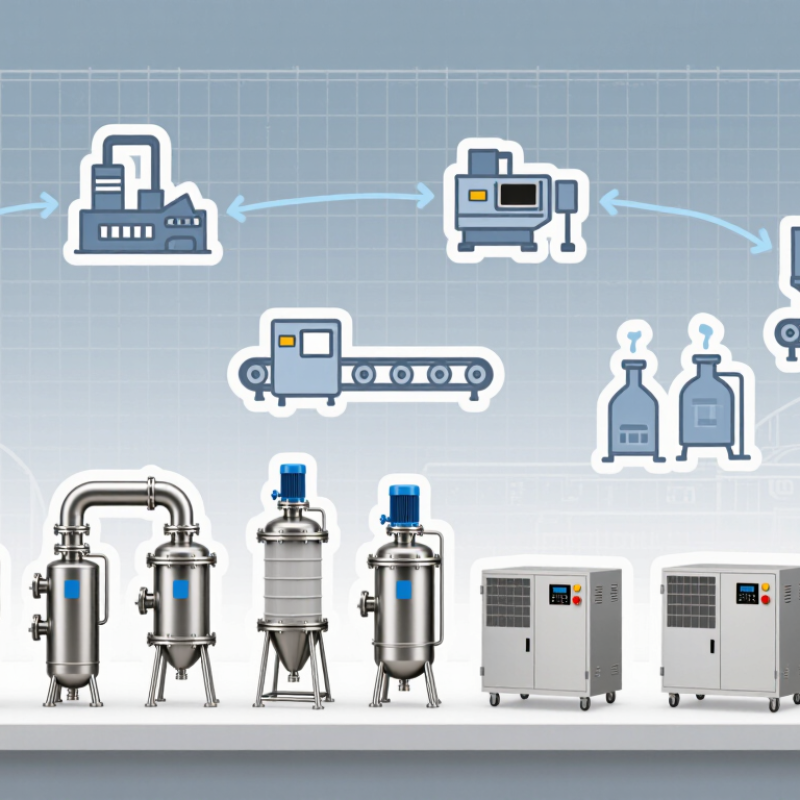
Industrial Vacuum Market Scope and China’s Supplier Landscape in 2024
China’s industrial vacuum market expanded across manufacturing, food processing, chemicals, electronics, and construction in 2024. Demand is moving beyond simple dust collection. Buyers now seek continuous-duty systems, stronger filtration, lower noise, and easier maintenance. China’s top ten suppliers generally serve different operating conditions rather than one universal segment.
The leading suppliers typically offer wet and dry units, central vacuum systems, explosion-resistant designs, and customized filtration modules. Their factories often support steel fabrication, machinery production, and automated assembly. Practical evaluation should include airflow, vacuum pressure, filter class, tank capacity, duty cycle, and spare-parts availability. A clean workshop floor is useful evidence. So is stable performance after several hours of operation.
Many Chinese suppliers combine competitive pricing with engineering adjustments for local production lines. Export experience also matters, especially for documentation, electrical standards, and delivery control. However, catalog specifications can hide important limitations. Some data may reflect ideal laboratory conditions, not dusty factory environments. Buyers should request test records, material details, warranty terms, and references from comparable facilities. This requires patience. Supplier rankings can change quickly as technology, service coverage, and quality systems develop. A lower purchase price may also create higher filter, labor, or downtime costs later.
China Industrial Vacuum Market Scope & Supplier Landscape Context — 2024
Manufacturing output growth provides a useful demand-side indicator for industrial vacuum suppliers. In 2024, high-tech and equipment manufacturing recorded stronger growth than the broader manufacturing sector, supporting demand for contamination control, process cleaning and dust-management equipment. The figures represent year-on-year industrial value-added growth and are not supplier market shares.
Source: National Bureau of Statistics of China, 2024 industrial production data.
Evaluation Criteria: Airflow, Vacuum Pressure, Filtration, and ISO 9001
China Top 10 Industrial Vacuum Suppliers: Evaluation Criteria
Ranking China’s top ten industrial vacuum suppliers requires more than catalog figures.
Airflow should be measured in cubic metres per hour at the hose inlet, not only at the motor.
Vacuum pressure needs a working-point reading under load.
A dramatic maximum number can mislead.
Filtration deserves equal weight. NIOSH states that HEPA filters capture at least
99.97% of 0.3-micron particles under test conditions.
Real performance falls when seals leak or filters load. Ask for particle-test records, pressure-drop curves, and filter replacement intervals.
Small details matter.
ISO 9001 is useful, but it does not prove superior suction. The ISO Survey 2023 recorded more than
1.2 million ISO 9001 certificates worldwide, so certification alone cannot separate suppliers.
Review certification scope, corrective-action records, calibration control, and serial-number traceability. Compare noise, energy use, duty cycle, and spare-part access under identical conditions.
A supplier should disclose measurement uncertainty. Few do. My ranking would reward repeatable data over peak claims, while admitting one weakness: published results may not reflect dusty factory floors.
Request an on-site trial before purchase.
China’s Top 10 Industrial Vacuum Suppliers by Product and Industry Focus
China’s top 10 industrial vacuum suppliers are better compared by product and industry focus than by sales claims. A reliable review should examine motor performance, filtration efficiency, noise levels, service access, and spare-part availability. Factory buyers also need clear test records, safety certificates, and realistic delivery terms.
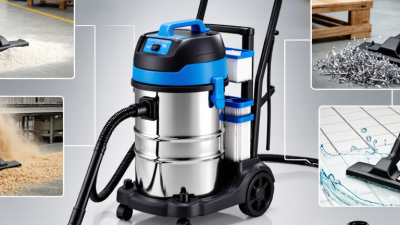
One supplier group focuses on dry industrial vacuums for workshops and warehouses. Another develops wet-and-dry units for metalworking floors and maintenance areas. High-efficiency filtration specialists serve cement, ceramics, and fine-powder processing. Chip-collection suppliers target CNC machining, where aluminum and steel fragments can damage ordinary equipment. Oil-mist extraction systems support turning and grinding lines. Centralized vacuum specialists design fixed pipe networks for large plants. Pneumatic models suit areas with limited electrical capacity. Hygienic vacuum suppliers serve food, beverage, and pharmaceutical production. High-temperature systems handle hot ash and process residues under controlled conditions. Custom engineering suppliers combine tanks, filters, controls, and automatic discharge systems.
The strongest candidates provide site surveys, airflow calculations, filter replacement guidance, and commissioning records. Ask for performance data under working conditions, not only laboratory figures. A unit rated for dust may perform poorly with sticky oil or damp material. That detail is often overlooked. Supplier rankings can also change when after-sales response, local technicians, and training are measured. Buyers should inspect weld quality, hose flexibility, grounding arrangements, and cleaning procedures before signing a contract. Some specifications look impressive, yet practical testing may reveal excessive pressure loss. Reliability is proven on the factory floor.
Performance Benchmarks: HEPA H13 Filtration at 99.95% MPPS Efficiency
When comparing China’s top ten industrial vacuum suppliers, HEPA H13 performance deserves close attention. An H13 filter must capture 99.95% of the most penetrating particle size, or MPPS, under EN 1822 testing conditions. This figure is not a general promise for every particle. It depends on airflow, filter loading, sealing, and test configuration.
In practical evaluations, inspect the complete filtration path. A reliable vacuum should use a rigid filter frame, continuous gasket contact, and controlled airflow around the filter. Ask suppliers for individual filter test reports, not only marketing sheets. Check whether testing covers the finished machine or the filter media alone. Small leaks can undermine excellent media performance.
Watch the pressure gauge during operation. Rising differential pressure often signals dust loading or restricted airflow. A strong motor cannot fully compensate for a poorly balanced system. I have seen machines maintain suction briefly, then lose performance after fine powder entered the filter housing. That detail is easy to miss.
Real workshops are less controlled than laboratories. Operators open covers, replace bags, and clean filters repeatedly. Supplier documentation should explain these procedures clearly, including inspection intervals and replacement criteria. Some specifications remain vague. That deserves challenge. A credible manufacturer should provide traceable testing, stable airflow data, and service guidance suited to the intended dust type. MPPS efficiency matters, but daily sealing discipline matters too.
Supplier Comparison: ATEX Safety, Power Ratings, Certifications, and Service Coverage
China’s top industrial vacuum suppliers should be compared by verified performance, not catalog claims. The International Energy Agency estimates that electric motor systems use nearly half of global electricity. Therefore, compare rated power with airflow, vacuum pressure, and filtration efficiency. Power alone misleads. A 7.5 kW unit may deliver weaker suction than a better-designed 5.5 kW model. Ask for test conditions, hose length, filter loading, and continuous-duty results.
ATEX capability requires careful checking. Directive 2014/34/EU covers equipment intended for potentially explosive atmospheres, while IEC 60079 standards define protection methods and testing principles. A supplier should identify the exact equipment group, zone, dust or gas category, and temperature class. “ATEX-ready” is not enough. Request certificates, technical files, marking details, and inspection records. Certification scope matters more than a logo. Independent laboratory reports also improve confidence, especially for combustible dust applications.
Service coverage separates a reliable supplier from a low-cost exporter. The U.S. Department of Energy reports that industrial compressed-air systems can lose 20–30% of output through leaks, showing how maintenance affects operating cost. Vacuum systems face similar neglect through clogged filters, worn seals, and damaged hoses. Compare spare-parts stock, response times, remote diagnostics, training, and local technicians. Service changes the outcome. I would still question optimistic energy-saving claims unless field data, warranty terms, and customer references support them.