2026 Top Industrial Vacuum Suppliers for Global Buyers
Industrial vacuum demand is expanding as factories pursue cleaner production, safer material handling, and lower maintenance costs. The International Energy Agency reports that industry remains one of the world’s largest energy-consuming sectors. Even modest efficiency gains can therefore influence operating budgets. A vacuum industrial system may appear small beside a production line, yet its motor, filter, hose, and duty cycle affect daily energy use.
The 2024 U.S. Department of Energy report on motor-driven equipment highlights the importance of efficient motors and properly matched controls in industrial facilities. Meanwhile, Grand View Research and MarketsandMarkets identify continued growth in industrial cleaning equipment, supported by manufacturing, food processing, pharmaceuticals, and logistics. Their findings suggest stronger demand for systems with HEPA filtration, continuous operation, antistatic protection, and liquid recovery. These features matter beside real machinery, where fine powder can settle inside a filter within hours.
This 2026 supplier guide evaluates manufacturers through practical buying criteria. We consider suction performance, filtration quality, certification transparency, spare-parts access, service coverage, and total cost of ownership. Catalog power ratings are not enough. A machine that struggles with abrasive dust may become expensive after several months. No supplier is perfect. Product data can also vary by testing method, and published market forecasts are not guarantees. Buyers should verify airflow, vacuum pressure, noise levels, materials, and local compliance before purchase. The strongest suppliers explain these limits clearly. That honesty is useful evidence of experience, technical competence, and reliability for global procurement teams.
Industrial Vacuum Suppliers: Market Scope and Buyer Requirements
2026 Top Industrial Vacuum Suppliers for Global Buyers
Industrial Vacuum Suppliers: Market Scope and Buyer Requirements
The industrial vacuum market is expanding across manufacturing, food processing, pharmaceuticals, and construction. MarketsandMarkets estimates the sector could grow from about USD 659 million in 2024 to USD 1 billion by 2029. Its projected compound annual growth rate is approximately 8.7%. The figures vary by report. Definitions are not fully consistent.
Suppliers now serve more than simple dust collection. Buyers often need continuous-duty motors, sealed filtration, antistatic hoses, and stainless-steel tanks. Fine powder, metal chips, and liquid waste require different designs. A unit collecting combustible dust may also need documented compliance with applicable hazardous-area requirements. Ask for test records, not attractive claims.
Energy use deserves closer attention. The U.S. Department of Energy identifies compressed-air systems as major industrial energy users, although vacuum equipment is assessed differently across facilities. Buyers should compare air consumption, noise, filter-loading behavior, and maintenance intervals. Small details matter. A clogged filter can reduce suction before operators notice.
ISO 21904-1 provides guidance for welding-fume extraction performance, while IEC 60335-2-69 addresses safety requirements for industrial and commercial vacuum cleaners. These standards do not replace local regulations or site risk assessments. Supplier evaluation should include spare-part availability, response time, training, and real operating references. I would still question any efficiency figure measured without a stated load, hose length, or filter condition.
Major Types of Industrial Vacuum Equipment and Applications
Major Types of Industrial Vacuum Equipment and Applications
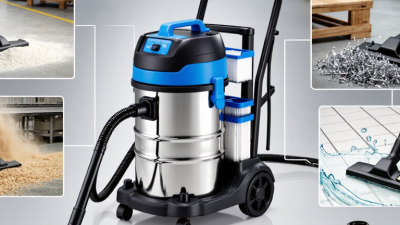
Industrial vacuum equipment varies by material, workspace, and operating pressure. Dry industrial vacuums collect metal chips, wood dust, powders, and packaging debris. Wet and dry models handle coolant, water, and mixed spills in maintenance areas. Central vacuum systems serve large factories through fixed pipe networks. They reduce hose movement and support repeated cleaning across production zones. High-temperature vacuums suit furnaces, foundries, and heat-treatment areas. Filter performance matters as much as motor power. Fine dust requires suitable filtration, sealed containers, and controlled discharge.
Tips: Match airflow and suction pressure to the material. Check filter-cleaning methods before purchasing. Ask suppliers for test data, service intervals, and replacement-part availability. A compact machine may work well beside one tool but fail across a long pipeline. I have seen buyers focus on wattage and overlook pressure loss. That mistake can create weak pickup and rising maintenance costs.
Applications differ sharply by industry. Food plants often need smooth, washable surfaces and careful residue control. Metalworking sites need durable containers for sharp chips and oily liquids. Construction teams may require portable units for concrete dust and renovation debris. Pharmaceutical facilities demand strict contamination control and validated cleaning procedures. Woodworking shops need reliable dust extraction near cutting equipment. Site conditions can change during one shift. Therefore, buyers should test the vacuum with real materials, not only catalog samples. Performance sometimes disappoints after installation. That is worth examining before a global order.
Key Criteria for Evaluating Global Vacuum Suppliers in 2026
Selecting an industrial vacuum supplier in 2026 requires more than comparing motor power or catalog prices. Buyers should examine operating experience in dusty, wet, abrasive, or heat-sensitive environments. Ask for application examples with measurable results, such as airflow stability after eight-hour shifts. Real evidence matters. Request test methods, maintenance records, and performance curves for the proposed configuration. A confident supplier explains limitations instead of promising universal performance.
Technical expertise should cover filtration, pressure control, materials, noise, and safe electrical design. Confirm whether the supplier can adapt hose diameters, collection systems, and continuous-duty requirements. Documentation must be clear, current, and traceable to the delivered unit. Independent testing or witnessed factory checks can strengthen confidence. Still, paperwork is not field performance. A clean specification sheet cannot reveal a blocked filter at 6 a.m. on a production line.
Global buyers should evaluate service reach, spare-part availability, response times, training, packaging, and communication across time zones. Ask who diagnoses failures and how quickly critical parts can ship. Total cost includes energy use, filters, labor, downtime, and disposal needs. References from comparable facilities are useful, but they should be verified rather than accepted blindly. No checklist is perfect. A careful buyer records assumptions, tests a sample where possible, and revisits the decision after real operating data arrives.
2026 Top Industrial Vacuum Suppliers for Global Buyers
Key criteria for evaluating global vacuum suppliers in 2026
This illustrative buyer-weighting model reflects commonly used industrial procurement priorities: lifecycle reliability, energy consumption, technical support, regulatory compliance, delivery performance, and total cost of ownership. The percentages represent evaluation weight, not company or brand market-share data.
Regional Supplier Strengths and International Market Coverage
2026 Top Industrial Vacuum Suppliers for Global Buyers
Regional supplier strength matters because industrial vacuum systems serve different working conditions. According to Grand View Research’s 2024 industry estimate, the global industrial vacuum cleaner market is expanding at roughly 6% annually through 2030. However, published figures differ because some studies include central systems, while others count only portable units. Buyers should inspect the methodology.
European suppliers often demonstrate strong engineering for dust classification, energy efficiency, and process integration. North American manufacturers typically offer broad service networks and customized systems for factories, warehouses, and maintenance teams. East Asian suppliers remain competitive in electronics, metalworking, and high-volume production, where compact designs and quick delivery matter. Regional expertise can be practical.
International coverage depends on more than export ability. A capable supplier should provide local spare parts, multilingual manuals, remote diagnostics, and technicians familiar with site standards. The DHL Trade Growth Atlas 2024 highlights continuing trade expansion, but also shows that supply chains are becoming more regional and risk-aware. That shift makes nearby technical support increasingly valuable.
Certification also needs careful review. Buyers should match filtration, electrical protection, and hazardous-dust controls with the application, rather than relying on a general compliance label. ISO-aligned quality systems can support reliability, but they do not guarantee field performance. Testing the unit with actual dust remains wiser. Mistakes happen. A regional supplier with transparent test records may outperform a larger exporter with limited local support.