China Top 10 Vacuum Compressor Manufacturers

China’s vacuum equipment sector has developed from a cost-focused supply base into a serious engineering market. Today, Chinese manufacturers produce vacuum pumps, boosters, systems, and vacuum compressor solutions for packaging, electronics, chemical processing, food production, and laboratories.

This introduction examines ten leading China-based manufacturers. The selection considers product range, engineering experience, manufacturing capacity, after-sales support, energy performance, and application reliability. A strong vacuum compressor must deliver stable pressure, controlled temperature, low leakage, and predictable maintenance intervals. In a factory, these details are visible. Operators notice oil mist near a pump, unusual vibration, or a pressure gauge that cannot hold its reading.

John F. O’Hanlon, a respected vacuum-technology author, offered a practical reminder: “A vacuum system is only as good as its weakest component.” That principle remains highly relevant when comparing Chinese suppliers. A competitive quotation means little if seals fail early or spare parts arrive slowly. Some manufacturers excel in dry screw technology. Others focus on Roots boosters, oil-sealed pumps, or customized systems. Few are equally strong in every category.

This ranking is not absolute. Public performance data can be incomplete. Some companies also present their capabilities differently. Buyers should verify certifications, pumping-speed curves, ultimate pressure, noise levels, and service coverage before purchasing. Site trials may reveal issues that brochures hide. That is not a weakness of the industry. It is a reason for careful evaluation. The following manufacturers deserve attention, but the best choice still depends on process conditions, budget, operating hours, and technical support.
China Top 10 Vacuum Compressor Manufacturers

What Is a Vacuum Compressor and How Does It Work?

A vacuum compressor is designed to remove gas from a sealed space and create lower pressure. The term is not perfectly standardized. In many factories, it describes a vacuum pump paired with a booster or compression stage. The inlet captures air from a chamber. Rotors, pistons, or diaphragms then reduce its volume. A discharge valve releases the compressed gas. Pressure keeps falling when gas removal exceeds leakage.

The operating principle depends on pressure difference. A sensor measures absolute pressure, not ordinary gauge pressure. This distinction matters below atmospheric pressure. Oil-sealed systems can reach deep vacuum, while dry systems reduce contamination risks. ISO 21360-1 defines methods for measuring vacuum-pump performance, including pumping speed and ultimate pressure. Real performance remains lower than catalogue figures. Warm gas, narrow pipes, moisture, and small leaks can change results.

Energy use deserves attention. The International Energy Agency reports that electric motor systems consume roughly half of global electricity. Vacuum equipment is only one part of that total, but inefficient control can waste substantial power. The U.S. Department of Energy also identifies leakage and oversized equipment as common compressed-air losses. A practical test uses a calibrated gauge, records pressure decay, and checks temperature near the outlet. It is not glamorous. Yet this simple evidence often reveals whether a vacuum compressor is correctly sized, properly sealed, and genuinely efficient.

Key Criteria for Evaluating Chinese Vacuum Compressor Manufacturers

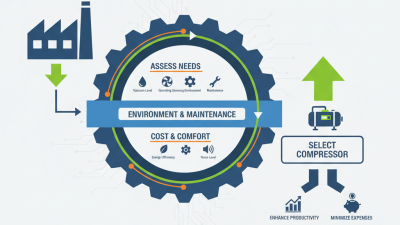
Evaluating Chinese vacuum compressor manufacturers requires more than comparing prices. Check production experience, engineering staff, and documented quality controls. A reliable manufacturer should explain its compression method, vacuum range, cooling design, and material choices clearly. Ask for test records showing pressure stability, noise levels, vibration, and energy consumption. Factory visits can reveal practical details, such as clean assembly areas and organized component storage. Small details matter.

Tips: Request a sample performance report before placing an order. Confirm whether testing uses calibrated instruments. Check the report date and measurement conditions. Also review warranty coverage, spare-part availability, response times, and technician training. A low purchase price may become expensive when seals or valves are difficult to replace.

Look for evidence from similar applications, not vague claims. Food processing, laboratories, packaging, and chemical production may require different sealing materials and oil-control systems.

Verify compliance with applicable safety and electrical requirements in the destination market. Discuss maintenance intervals, filter replacement, and emergency support before signing a contract.

I have found that written specifications prevent many disputes, although they cannot replace real testing. No checklist is perfect. Manufacturers should also accept reasonable third-party inspections. If they avoid basic technical questions, reconsider the partnership.

China’s Top 10 Vacuum Compressor Manufacturers

China’s Top 10 Vacuum Compressor Manufacturers

China’s top 10 vacuum compressor manufacturers are often evaluated by engineering depth, production consistency, and after-sales support. A useful comparison should examine oil-free, rotary vane, screw, and Roots booster technologies. Different applications need different solutions. Semiconductor lines may require clean, stable vacuum, while food packaging often prioritizes hygiene and easy maintenance.

During supplier checks, buyers should request pump curves, ultimate vacuum data, leakage rates, noise readings, and energy consumption figures. These details reveal more than advertising language. Factory visits can show machining quality, assembly discipline, and testing procedures. Ask whether each unit is tested under realistic operating conditions. A low pressure number alone does not prove reliable performance.

The top 10 list should also consider service coverage, spare-parts availability, warranty terms, and technical training. Some manufacturers provide strong equipment but limited overseas support. Others respond quickly yet offer less specialized engineering. Published specifications may use different test methods, which makes direct ranking imperfect. I would verify certification documents and sample performance before placing a large order. In practical use, a compressor that starts smoothly, holds stable pressure, and survives dusty workshop conditions may outperform a faster laboratory model. Small details matter.

Product Applications Across Major Industrial Sectors

China Top 10 Vacuum Compressor Manufacturers

Industrial buyers should compare vacuum compressor manufacturers by application, not catalogue size. Semiconductor lines need stable, oil-free vacuum and extremely low contamination. Food packaging requires clean evacuation around sealing chambers, often in humid, washdown environments. Chemical plants demand corrosion-resistant materials, dependable cooling, and controlled exhaust handling. Medical facilities need validated performance and continuous operation.

According to MarketsandMarkets, the global vacuum pump market was projected to grow from about USD 5.9 billion in 2023 to USD 8.1 billion by 2028, at a 6.5% compound annual growth rate. This expansion reflects wider use in packaging, electronics, pharmaceuticals, and process manufacturing. In wastewater treatment, vacuum systems support sludge handling and aeration-related processes. Power plants use them for condenser evacuation and equipment maintenance. Small details matter.

The U.S. Department of Energy reports that compressed-air systems can consume around 10% of industrial electricity, while leaks may waste 20% to 30% of output. Vacuum installations also lose efficiency through poor piping, blocked filters, and oversized equipment. A practical supplier evaluation should therefore examine specific energy consumption, achievable vacuum level, noise, service response, and spare-parts availability. Field testing is valuable. Published laboratory figures can disappoint on a dusty factory floor.

For the China top 10 selection, application records deserve more weight than marketing claims. Some manufacturers offer strong hardware but limited commissioning support. That weakness is easy to overlook.

China Top 10 Vacuum Compressor Manufacturers - Product Applications Across Major Industrial Sectors
Rank Anonymous Manufacturer Profile Primary Vacuum Technologies Typical Ultimate Vacuum Range Typical Airflow Range Oil-Free Availability Major Product Applications Key Industrial Sectors Served Common Compliance Requirements
1 Profile 01
High-Capacity Industrial Systems
Rotary Screw Dry Screw Roots Booster Approximately 0.5–100 mbar(a), depending on configuration 100–10,000 m³/h Available for dry-process applications Central vacuum stations, pneumatic conveying, vacuum drying, packaging lines Food processing, chemicals, general manufacturing, logistics ISO 9001 quality systems; electrical and pressure-equipment requirements applicable to the installation
2 Profile 02
Oil-Free Process Equipment
Dry Claw Dry Screw Scroll Approximately 0.1–150 mbar(a) 20–3,000 m³/h Core product focus Clean vacuum generation, laboratory systems, contamination-sensitive processing Electronics, pharmaceuticals, medical equipment, food and beverage ISO 8573-1 air-quality considerations; hygienic design and cleanroom requirements where applicable
3 Profile 03
Liquid-Ring and Wet-Service Solutions
Liquid Ring Two-Stage Liquid Ring Vacuum Pump Packages Approximately 30–200 mbar(a), subject to seal liquid temperature 50–20,000 m³/h Not applicable to liquid-ring operating principle; process liquid is used Vapor handling, filtration, evaporation, priming, solvent recovery Petrochemicals, power generation, pulp and paper, mining Corrosion compatibility, mechanical safety, motor efficiency, and site environmental requirements
4 Profile 04
Rotary Vane and Compact Systems
Oil-Lubricated Vane Dry Vane Compact Packages Approximately 0.5–500 mbar(a) 5–1,500 m³/h Both oil-lubricated and dry configurations Vacuum forming, degassing, freeze-drying support, small packaging machines Plastics, printing, woodworking, laboratories, small machinery Electrical safety, noise control, filtration, and maintenance-access requirements
5 Profile 05
Roots Booster and Vacuum Package Specialist
Roots Blower Booster Package Dry Pump Integration Approximately 0.001–10 mbar(a) with a suitable backing pump 100–12,000 m³/h Available when paired with oil-free backing equipment High-throughput evacuation, vacuum coating support, vacuum furnaces, degassing Metals, heat treatment, glass, electronics, research equipment System-level interlocks, thermal protection, vibration control, and vacuum measurement requirements
6 Profile 06
Medical and Laboratory Vacuum Systems
Scroll Dry Piston Oil-Free Claw Approximately 10–300 mbar(a) 5–600 m³/h Strong emphasis on oil-free operation Dental suction, laboratory vacuum, sterilization support, medical suction systems Healthcare, universities, testing laboratories, biotechnology Medical-device quality controls, cleanability, low noise, and applicable national healthcare standards
7 Profile 07
Food and Packaging Vacuum Equipment
Oil-Lubricated Vane Dry Claw Central Vacuum Approximately 0.5–300 mbar(a) 10–5,000 m³/h Oil-free options for direct or sensitive production environments Vacuum packaging, meat processing, dairy processing, pick-and-place automation Food and beverage, cold-chain logistics, consumer goods Hygienic construction, food-contact risk control, cleanability, and energy-efficiency requirements
8 Profile 08
Electronics and Semiconductor Process Systems
Dry Screw Dry Scroll Booster Systems Approximately 0.001–100 mbar(a), depending on process stage 20–4,000 m³/h Essential for contamination-sensitive processes Vacuum deposition support, wafer handling, component testing, clean drying Semiconductors, photovoltaics, displays, precision electronics Low particle generation, low hydrocarbon backstreaming, cleanroom compatibility, and process monitoring
9 Profile 09
Energy and Heavy-Industry Systems
Liquid Ring Screw Vacuum Custom Skids Approximately 20–500 mbar(a) 500–30,000 m³/h Available according to process and emissions requirements Condenser air removal, turbine sealing support, transformer oil treatment, process evacuation Power generation, metallurgy, oil and gas, chemical production Industrial mechanical design, hazardous-area classification where required, corrosion control, and lifecycle serviceability
10 Profile 10
OEM and Customized Vacuum Modules
Piston Diaphragm Vane Integrated Modules Approximately 5–1,000 mbar(a) 1–1,000 m³/h Oil-free and oil-lubricated variants Automation equipment, analytical instruments, laser systems, vacuum lifting and material handling Machinery manufacturing, research, medical instruments, robotics OEM interface requirements, EMC compatibility, electrical safety, noise limits, and application-specific validation

Note: Performance figures are representative industry ranges for comparable vacuum compressor and vacuum pump configurations. Actual ultimate pressure, airflow, materials, energy consumption, and compliance depend on the selected technology, operating conditions, gas composition, seal liquid, temperature, and system design.

How to Select the Right Chinese Vacuum Compressor Supplier

Choosing a Chinese vacuum compressor supplier requires more than comparing catalog prices. Start with the application: required vacuum level, air displacement, operating hours, gas composition, and installation environment. A supplier should calculate capacity from your process data, not push the largest model. Ask for performance curves measured under clear test conditions. Numbers without test details are weak evidence.

Inspect the manufacturer’s engineering capability. Request drawings, material specifications, motor data, and quality-control records. Check whether each unit receives leak testing, vibration checks, and a final performance test. Factory audits can reveal practical details, such as spare-parts storage, calibration procedures, and assembly cleanliness. An established quality certificate helps, but it does not replace direct verification. Look for traceable serial numbers. Small details matter.

Communication is another technical filter. Reliable suppliers answer questions with tolerances, not vague promises. Ask about oil-free operation, noise limits, cooling requirements, maintenance intervals, warranty coverage, and response times. Confirm voltage and certification requirements before production begins. A pre-shipment inspection or sample order can expose problems early. Never trust photographs alone. In sourcing work, an attractive quotation sometimes hides limited after-sales support or inconsistent components. That risk deserves written terms, clear acceptance criteria, and agreed remedies. A supplier may be capable, yet still unsuitable for your production schedule. Leave room for technical revisions; real equipment rarely fits the first specification perfectly.