Why Choose a Rotary Pump for Your Application?

Choosing a rotary pump starts with the job it must perform, not just the fluid name on a specification sheet. Flow rate, viscosity, pressure, temperature, and material compatibility all shape the right choice. A pump handling thick syrup at a steady rate faces different demands from one moving a thin solvent through a compact production line. Small details matter. A narrow inlet, dry-running risk, or frequent start-stop cycles can change performance and service life.

Pump authority Igor J. Karassik co-authored the Pump Handbook, a major reference on pump engineering. I can’t verify a verbatim quotation from him on rotary-pump selection, so I won’t invent one. The practical takeaway, consistent with sound pump-engineering practice, is simple: match the pump to the operating duty, then verify the conditions it will actually encounter.

A rotary pump moves fluid through the repeated motion of rotating elements. Depending on its design, it can provide controlled, steady delivery and handle many viscous fluids. That does not make it right for every application. Fluid properties, operating speed, clearances, and maintenance access deserve careful review. A glossy catalog curve cannot show every real-world wrinkle.

This guide explains when a rotary pump may be a strong fit, what design features to compare, and which trade-offs to examine before purchase. Expect practical questions, not a universal verdict. The best choice depends on your process—and sometimes the first assumptions need a second look.
Why Choose a Rotary Pump for Your Application?

What Is a Rotary Pump and How Does It Work?

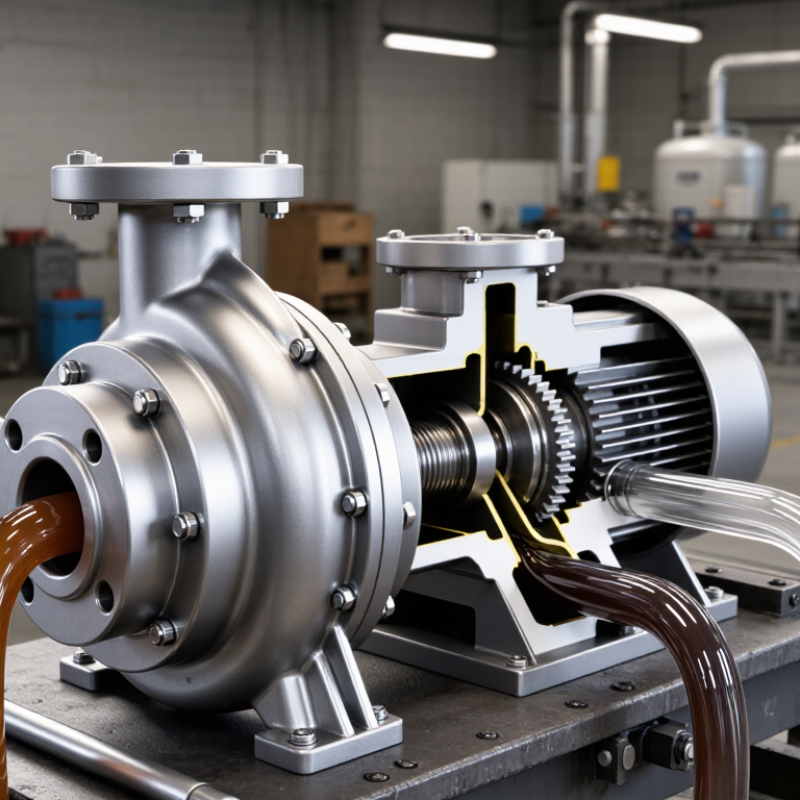
A rotary pump is a positive-displacement pump: rotating parts trap liquid and carry it from the inlet to the outlet. In a gear pump, for example, liquid fills spaces between the gears and casing. As the gears turn, those spaces move toward the discharge. Screw, vane, and lobe pumps use different rotating elements, but follow the same basic principle. The flow is often fairly steady. It changes with pump speed, liquid viscosity, and internal leakage. Pressure, however, depends on the system’s resistance; a pump does not simply set its own discharge pressure. A suitable relief device helps protect the pump if the outlet is blocked.

Small detail, big consequence.

This design can suit applications that need controlled flow or must handle viscous liquids, such as oils and syrups. But “rotary” does not mean every model handles every fluid well. Clearances, temperature, abrasiveness, and shear sensitivity all matter. The U.S. Department of Energy’s 2006 report, Improving Pumping System Performance: A Sourcebook for Industry, says pumping systems use nearly 20% of global electricity and can account for 25–50% of energy use in some industrial facilities. Those figures apply to pumping systems overall, not rotary pumps alone. They underline why selection matters: compare the required flow and pressure with the fluid’s real operating conditions, then consider efficiency across the expected speed range.

Real systems are less tidy.

A pump that works well on paper may still need careful testing with the actual liquid.

Which Types of Rotary Pumps Are Available?

Rotary pumps come in several forms, each suited to different fluids and operating conditions. Gear pumps use meshing teeth to move oil steadily through a compact housing. Screw pumps use rotating screws to deliver smooth flow, often with less pulsation. Vane pumps slide vanes along a rotor, making them useful for controlled transfer of relatively clean liquids. Lobe pumps handle delicate or viscous products; their clearances also make them less tolerant of abrasive particles. Peristaltic pumps squeeze a flexible tube, keeping the liquid away from moving pump parts. That can simplify cleaning, though tubing eventually wears. No type wins every time.

Selection starts with viscosity, flow rate, pressure, temperature, and solids content. A thick fluid may favor a screw or lobe design, while abrasive grit can shorten the life of close-fitting parts. The U.S. Department of Energy’s Improving Pumping System Performance sourcebook reports that pumping systems account for nearly 20% of global electricity demand. It also notes they can use 25–50% of energy in some industrial plants. These figures cover pumping systems broadly, not rotary pumps alone, but they show why operating efficiency matters. API Standard 676 covers rotary positive-displacement pumps and provides a useful specification reference. In practice, check the pump curve against real operating conditions; a clean-water test rarely tells the whole story.

What Advantages Do Rotary Pumps Offer?

Rotary pumps can deliver a steady, predictable flow because their rotating elements carry measured volumes of liquid from the inlet to the outlet. This makes them useful when an application needs consistent transfer or controlled dosing. Many designs also handle thicker fluids, such as oils, syrups, or viscous process liquids, more effectively than some other pump types. The result can be a compact installation with fewer flow fluctuations. That matters near a filling line, where uneven delivery can slow work and create spills.

They can also be self-priming in suitable configurations, which helps when a pump must draw liquid through a suction line. But this depends on the design and operating conditions. No pump is perfect. Rotary pumps may need close attention to clearances, seals, and lubrication, and abrasive particles can accelerate wear. Dry running can also cause damage in many models. A sensible selection starts with the fluid’s viscosity, temperature, solids content, and required flow rate. I would not choose by capacity alone; a pump that handles thick liquid well at one speed may perform poorly at another. Check the manufacturer’s operating limits, then confirm the choice under real service conditions.

Why Choose a Rotary Pump for Your Application? - What Advantages Do Rotary Pumps Offer?

Performance Dimension What Rotary Pumps Offer Practical Benefit Typical Applications Selection Consideration
Positive-displacement flow A set volume of liquid is moved with each shaft revolution; flow generally increases with pump speed. Provides predictable delivery across changing system conditions, subject to slip and operating limits. Metering, transfer, and process-feed duties. Use suitable flow control and pressure protection; a positive-displacement pump can build pressure against a closed discharge.
Viscous-fluid handling Many rotary designs handle viscous liquids effectively; performance depends on pump type, speed, clearances, and fluid properties. Can move products that may be difficult to pump efficiently with some centrifugal pumps. Oils, syrups, resins, polymers, and certain food products. Check viscosity at operating temperature, startup conditions, suction losses, and the pump’s allowable speed.
Flow smoothness Screw and some other rotary designs can deliver relatively smooth flow; pulsation varies by design and operating conditions. May reduce flow variation in processes that need steady transfer. Lubrication systems, chemical transfer, and continuous processing. Review pulsation requirements and consider system-level dampening where needed.
Reversible operation Some rotary pumps can move fluid in either direction when designed and installed for reversible service. Can simplify transfer between tanks or support line clearing. Tank transfer, loading systems, and selected process lines. Confirm that seals, relief arrangements, and the specific pump model are suitable for reverse flow.
Compact, continuous operation Rotating elements provide continuous transfer in a relatively compact pump assembly. Can fit into packaged equipment and support steady-duty operation when correctly selected. Skids, industrial machinery, and production lines. Allow for access to seals and wear parts, and verify duty cycle, temperature, and materials compatibility.
Gentle product transfer Certain designs, such as properly selected lobe or twin-screw pumps, can transfer shear-sensitive products gently at suitable speeds. May help preserve product structure in applications where excessive shear is undesirable. Food, beverage, personal-care, and some bioprocess products. “Gentle” performance is application-specific; assess speed, clearances, solids, and hygienic design requirements.
Broad design choices Gear, screw, vane, lobe, and progressing-cavity designs address different fluid and duty requirements. Allows the pump principle to be matched to flow, viscosity, solids, cleanliness, and maintenance needs. Chemical, oil and gas, food processing, wastewater, and general industry. Compare the complete operating envelope rather than selecting on pump type alone.

Note: Actual capacity, pressure, efficiency, and fluid compatibility depend on pump design, materials, speed, installation, and operating conditions. Follow the pump manufacturer’s specifications and applicable safety requirements.

Which Applications Benefit Most From Rotary Pumps?

Rotary pumps are often a strong choice when an application needs steady flow, especially with thicker liquids. Gear, screw, and lobe designs can move oils, syrups, resins, and some food ingredients at controlled rates. Picture a cool syrup leaving a mixing tank: it resists flow, but a suitable rotary pump can transfer it without relying on high liquid velocity.

Exact performance depends on viscosity, temperature, clearances, and pump design. They can also suit dosing and circulation duties where a predictable volume matters. In a filling line, for example, a pump may feed a viscous product through a short hose to a dispensing nozzle.

Some rotary designs handle shear-sensitive materials gently, but that is not guaranteed; speed and clearances matter. A good fit. Abrasive particles, dry running, or sudden viscosity changes can cause wear or unstable operation. Not always.

Before selecting a pump, check the fluid’s properties and the required flow and pressure against the manufacturer’s performance data. A rotary pump may look ideal on paper, yet a small change in temperature can alter the fluid enough to affect output.

What Factors Should Guide Rotary Pump Selection?

A rotary pump should be selected around the fluid and operating conditions, not flow rate alone. Record the required capacity, pressure, viscosity, temperature, and solids content. A thick syrup at low temperature behaves very differently from warm, thin oil. Check the pump’s materials against the fluid, too. Seal compatibility can become a weak point.

The U.S. Department of Energy’s Improving Pumping System Performance: A Sourcebook for Industry reports that pumping systems use nearly 20% of global electricity demand. It also notes that energy use can represent 25–50% of operating energy in some industrial facilities. These figures make speed control and right-sizing worth examining. A pump running far above its required flow may waste energy and increase wear. Check suction conditions and the manufacturer’s net positive suction head requirements before finalizing the selection.

Think about cleaning, maintenance access, and how often the duty cycle changes. A pump that handles viscous liquid well may still struggle with abrasive particles or frequent dry running. Small details matter. Pilot testing can reveal heating, pulsation, or unexpected noise that a specification sheet misses. There is no perfect selection on paper; the best choice depends on measured conditions, and those measurements may need revisiting after installation.