Choosing the right ac vacuum pump is rarely a simple matter of comparing prices. Global buyers must examine vacuum level, air displacement, motor voltage, frequency, duty cycle, noise, and service access. A pump running beside a busy HVAC workstation may need quiet operation. Another pump handling continuous refrigeration maintenance may require stronger cooling and oil management.
Vacuum-technology author John F. O’Hanlon offers a useful principle: “The vacuum system is only as good as its weakest component.” This warning remains practical. A well-designed ac vacuum pump cannot compensate for leaking hoses, poor fittings, contaminated oil, or an undersized manifold. Small details matter.
This guide compares ten major pump types, including oil-lubricated rotary vane, dry scroll, diaphragm, piston, and rotary claw designs. Each type serves a different operating reality. Some deliver deep vacuum. Others prioritize clean operation, low maintenance, or frequent starting. There is no universal winner. That is an important limitation.
Our comparison focuses on measurable specifications and field-based buying concerns. We consider ultimate vacuum, pumping speed, temperature behavior, energy use, replacement parts, and manufacturer support. We also highlight gaps that product brochures sometimes hide. Rated performance may change under heat, altitude, or continuous loading. A pump that looks ideal on paper may struggle in a dusty workshop.
Readers should treat this ranking as a practical starting point, not a final purchasing decision. Confirm local power requirements, connect the pump to the application, and request verified test data. Reliable selection requires both technical knowledge and a little skepticism.
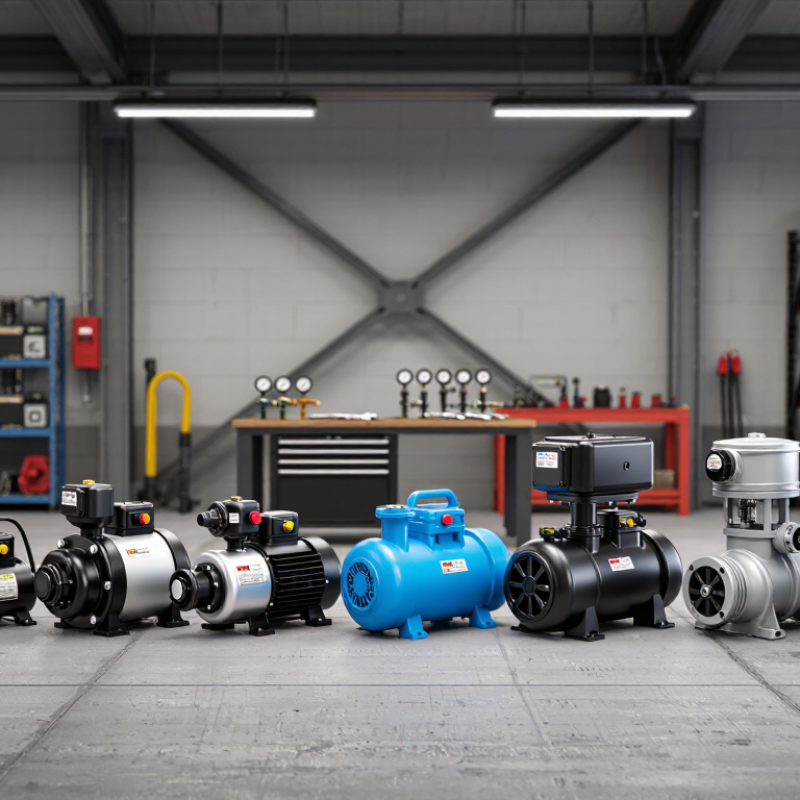
AC vacuum pumps remove gas from a sealed system by creating a pressure difference. An AC motor drives the pumping mechanism, while electrical frequency affects speed and heat generation. Common designs include rotary vane, diaphragm, scroll, piston, and liquid-ring pumps. Each type handles different vacuum levels, gas loads, moisture, and maintenance demands.
A rotary vane pump traps gas between a rotating rotor and sliding vanes. The gas is compressed and discharged through an oil-sealed outlet. Diaphragm pumps use flexible membranes, so they avoid oil contamination in many laboratory applications. Scroll pumps compress gas through orbiting spiral elements. The principle looks simple, but seal condition, inlet temperature, and vapor content strongly affect performance.
Technicians should check the ultimate pressure with a calibrated gauge, not the pump label alone. A clean reading can still mislead. Small leaks often hide around hoses, fittings, or service valves. Moisture may also overload oil and reduce pumping speed. Gas ballast can help remove vapor, although excessive use may lower the final vacuum. In practical testing, let the pump warm up before judging performance. Listen for uneven vibration, inspect oil color, and replace damaged hoses promptly. One detail is easy to overlook: a powerful pump cannot compensate for poor system design. Routine records make unusual readings easier to question.
AC vacuum pumps are classified by their pumping mechanism, ultimate pressure, and operating environment. The AC power source only describes the motor supply. It does not define the vacuum technology.
For global buyers, ten common types include single-stage rotary vane, two-stage rotary vane, diaphragm, piston, scroll, claw, liquid ring, dry screw, Roots booster, and turbomolecular pumps. Rotary vane models suit refrigeration service and general laboratory work. Two-stage designs usually reach deeper vacuum levels. Diaphragm and scroll pumps avoid oil contamination, which helps protect sensitive instruments. Liquid ring pumps tolerate moisture well, while dry screw pumps handle continuous industrial duty. Roots boosters increase pumping speed when paired with another pump. Turbomolecular units support ultra-high vacuum applications, but they require careful installation and clean operating conditions.
A second classification uses oil-sealed and oil-free construction. Oil-sealed pumps often deliver strong performance at a lower purchase cost. Oil-free pumps reduce backstreaming and simplify maintenance. Buyers should also compare flow rate, ultimate pressure, noise, voltage, frequency, inlet size, and service intervals. A pump rated at 8 cubic meters per hour may perform poorly if the hose is narrow. That detail is often missed.
The best choice depends on the gas, moisture level, target pressure, and duty cycle. Classification is helpful, but not perfect. Real systems often combine two pump types. Field testing still matters.
AC vacuum pumps differ by sealing method, moving parts, achievable pressure, and tolerance for vapor. Choosing by voltage alone is a common mistake. The working process matters more.
Oil-sealed rotary vane pumps deliver strong vacuum for refrigeration service, freeze-drying, and laboratory chambers. Their oil can capture moisture and odors.
Dry rotary vane pumps avoid oil contamination but may wear faster in dusty applications.
Diaphragm pumps handle corrosive vapors well and need little maintenance. However, their vacuum depth is limited.
Scroll pumps run quietly and suit clean analytical systems, though damaged tip seals can be costly. Piston pumps provide robust intermittent service, but vibration may disturb delicate instruments.
Dry screw pumps support continuous industrial duty and tolerate larger gas loads. They consume more power and need careful temperature control.
Claw pumps offer contact-free compression for packaging and pneumatic equipment. Their performance can decline with condensation.
Liquid-ring pumps handle wet gases effectively, especially in chemical and process plants. They require a compatible operating liquid.
Roots booster pumps move high gas volumes quickly, but they need a backing pump and cannot start alone at atmospheric pressure.
Turbomolecular pumps reach very high vacuum for coating and research systems. They require clean conditions, controlled startup, and reliable backing pressure.
Field experience shows that inlet filters, vapor traps, and proper pipe sizing often matter as much as pump design. I have seen oversized pumps perform poorly through narrow hoses.
A dry pump is not automatically maintenance-free. Confirm ultimate pressure, pumping speed under load, duty cycle, noise, and service access before purchase.
Our selection can still be imperfect when gas composition changes. Test the real process whenever possible.
Top 10 AC Vacuum Pump Types for Global Buyers
How Global Buyers Compare Pump Performance and Costs
Global buyers compare AC vacuum pumps through measurable performance, service needs, and operating costs. The ten common choices include rotary vane, two-stage rotary vane, diaphragm, scroll, piston, Roots booster, dry screw, claw, liquid ring, and turbomolecular pumps. Rotary vane models often deliver strong vacuum depth at a practical purchase price. Two-stage designs usually reach lower pressures, but oil changes and seal checks add maintenance work. Diaphragm and scroll pumps run cleaner because they avoid oil contamination.
Performance depends on more than ultimate vacuum. Buyers should check pumping speed, measured in cubic meters per hour, and recovery time after evacuation. Noise, heat output, duty cycle, and voltage compatibility also affect daily productivity. A pump rated at 100 liters per minute may perform poorly with a narrow hose or leaking fittings. That detail is often missed. Dry screw and claw pumps can reduce fluid handling, but their initial prices are commonly higher. Liquid ring pumps tolerate vapor better, while turbomolecular pumps suit specialized, high-vacuum systems.
A realistic cost comparison includes filters, oil, electricity, downtime, shipping, and technician hours. In a workshop, a quieter diaphragm pump may protect staff comfort during repeated service jobs. In humid conditions, vapor tolerance can matter more than the lowest quoted price. My own evaluation would not trust catalog figures alone. Testing with a calibrated gauge is essential. Results can change with ambient temperature, hose length, and operator habits. A cheaper pump may win at purchase, yet lose after months of frequent maintenance.
How global buyers compare pump performance and indicative purchase costs
Lower ultimate pressure indicates deeper vacuum capability. Indicative costs represent typical new-equipment purchase ranges in USD for industrial configurations and vary by capacity, materials, controls, and regional standards. Turbo-molecular pumps generally require a backing pump.
International buyers should match pump design with system demands, refrigerant compatibility, and service conditions. Rotary vane pumps suit many air-conditioning tasks and provide strong vacuum performance. Diaphragm pumps avoid oil contamination, while scroll and piston designs support cleaner applications. Dry pumps can simplify maintenance, but their initial cost may be higher. Compare ultimate vacuum, pumping speed, noise level, oil capacity, and expected duty cycle.
Voltage details matter. Confirm 110V or 220V operation, 50Hz or 60Hz frequency, plug type, and motor protection. Ask for test reports, calibration records, material declarations, and clear user manuals. Check applicable electrical safety, electromagnetic compatibility, environmental, and import requirements in the destination market. Documentation varies by country. Do not assume one certificate satisfies every customs authority. Request the correct commercial invoice, packing list, country-of-origin statement, and product classification information.
Purchasing teams should inspect leak-test procedures, gauge accuracy, oil-mist control, spare-part availability, warranty terms, and repair support. A short video inspection can reveal loose fittings, poor wiring, or weak packaging. Use moisture-resistant cartons and suitable export protection, especially for long sea shipments. Field technicians often find that warm-up time changes readings. Record acceptance limits before payment. A perfect checklist is impossible. Recheck the details that seem obvious. Also consider local technician skills, because a technically excellent pump may underperform without proper oil changes and hose maintenance.