Top 10 Vacuum Hydrocarbon Cleaning Machine Manufacturers
Selecting a vacuum hydrocarbon cleaning system is not just a matter of comparing machine sizes. Parts, soil types, production volume, and drying requirements all shape the right choice. A system built for precision components may not suit a busy maintenance line. Small details matter.
This guide introduces ten Vacuum Hydrocarbon Cleaning Machine Manufacturers and the capabilities buyers may want to examine. Look closely at chamber dimensions, basket capacity, process controls, filtration options, and available technical support. Ask how the machine handles your actual components, not only the examples in a brochure. A clear answer is useful. A vague promise deserves a follow-up.
Reliable comparisons also require restraint. Product features and service coverage can change, and published specifications do not prove performance in every factory. Where possible, request a process trial using representative parts and soils. Check operating procedures, training, maintenance access, and documented performance data before making a decision. The most expensive option is not automatically the best fit, and the lowest quote may leave important needs unaddressed.
Experience on the production floor often reveals what a specification sheet misses: loading time, operator access, or the space needed for routine service. No supplier is perfect. The ranking is a starting point, not a guarantee. Use it to frame better questions and compare manufacturers against your own process, budget, and quality goals.
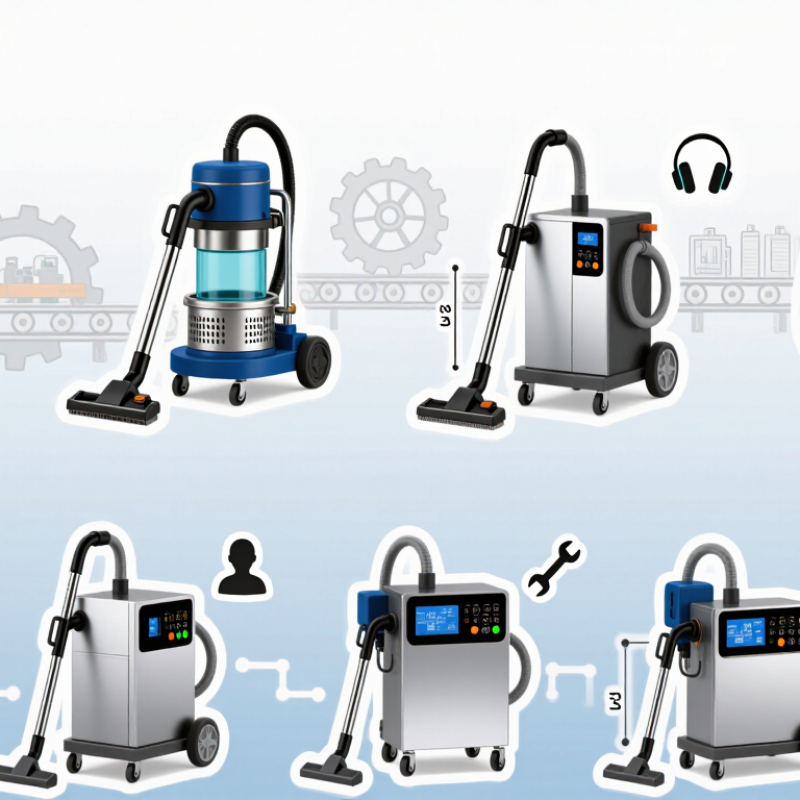
Definition and Operating Principles of Vacuum Hydrocarbon Cleaning
Vacuum hydrocarbon cleaning is a batch process that removes oils, grease, and machining residues inside a sealed chamber. The machine circulates a hydrocarbon solvent over or around the parts, often using spray, immersion, or ultrasonic agitation. Reduced pressure helps solvent vaporize at lower temperatures, which supports drying and can draw liquid from narrow gaps. The NIOSH Pocket Guide reports that n-hexane has a vapor pressure of 124 mmHg at 20°C and a boiling point near 69°C. NIST’s Chemistry WebBook lists a similar normal boiling point, about 68.7°C. These figures illustrate how readily a representative hydrocarbon can evaporate; they are not operating settings for every machine. Small details matter.
A typical cycle loads the parts, applies solvent, drains the chamber, and then uses vacuum drying. Some machines add rinse stages or repeat pressure cycles. A condenser captures solvent vapor for reuse, while filters can help control particles in the circulating liquid. The vacuum itself does not dissolve contamination; solvent chemistry and fluid movement do that work. Still, cleaning results depend on part geometry, soil type, loading, and cycle settings. A blind hole may retain liquid even after a timed cycle, so process checks should reflect the actual parts. That part is easy to overlook.
How a Vacuum Hydrocarbon Cleaning Cycle Works
A vacuum hydrocarbon cleaning cycle moves parts through controlled stages inside a sealed chamber. Under reduced pressure, the cleaning fluid can work at a lower temperature than it would at atmospheric pressure. That matters for heat-sensitive components. The exact settings depend on the soil, material, and machine design, so a cycle should be validated rather than copied from a generic recipe.
The chamber is loaded, sealed, and evacuated. Hydrocarbon solvent then contacts the parts by immersion, spraying, or a combination of methods. Some systems add ultrasonic energy to loosen residue in narrow passages. The fluid carries oils and fine contaminants away. Then it is drained and filtered. A rinse with cleaner solvent may follow, helping reduce redeposition on precision surfaces.
Next, the machine removes remaining solvent through vacuum drying. Vapors are condensed and recovered within the system, while sensors and interlocks help monitor operating conditions. The cycle ends only when the process reaches its programmed limits; a dry-looking part is not always a clean part. Check representative components for residue and moisture, and document the result. Small details matter. Basket loading can shadow surfaces, and that is easy to overlook. A cycle may look repeatable while still missing a difficult recess, so periodic review remains worthwhile.
Industries and Components Served by These Machines
Vacuum hydrocarbon cleaning machines are used in automotive, aerospace, general machining, and precision engineering facilities. These industries often need to remove cutting oil, grease, and fine particles from parts with narrow passages or detailed surfaces. Typical components include gears, bearings, valve bodies, hydraulic manifolds, and machined housings. Some production lines also clean metal fasteners and tooling between operations.
The vacuum environment helps reduce solvent evaporation during cleaning and drying, while filtration can capture loosened residue for removal. This can matter when parts have blind holes, small channels, or surfaces that are difficult to inspect by eye. Still, one cycle does not suit every component. Material, soil type, part geometry, and drying requirements all affect the process. A small test batch is often more useful than assumptions based on a machine’s capacity. Not every part belongs in the same cycle. Even a well-specified system may need adjustment when real production parts arrive with inconsistent oil loads.
Criteria for Evaluating Machine Manufacturers
When evaluating vacuum hydrocarbon cleaning machine manufacturers, look beyond headline cycle times. Ask how the chamber, vacuum system, and filtration stages handle your actual parts and soils. A supplier should explain its process settings clearly, including cleaning, rinsing, and drying stages. Request test results using representative components, not only ideal samples. A polished brochure can still leave gaps.
Check the evidence behind performance claims. Useful details include repeatability data, residue measurements, energy use, and documented safety features. Ask who installs and services the machine, how quickly critical parts are available, and what operator training includes. Speak with comparable users if possible. Their experience may reveal practical issues, such as loading time or maintenance access, that a specification sheet misses. No evaluation is perfect; test plans can overlook an awkward part shape or a rushed production shift.
Tips: Bring sample parts and define acceptance limits before a demonstration. Watch a full cycle, inspect the results, and ask what happens when settings drift. Check service terms in writing. Small details matter.
Top 10 Vacuum Hydrocarbon Cleaning Machine Manufacturers: Evaluation Criteria
This illustrative scoring framework highlights factors buyers can compare when assessing manufacturers. Scores indicate relative evaluation importance on a 10-point scale; they are not ratings of specific companies or brands.
Profiles of Ten Vacuum Hydrocarbon Cleaning Machine Manufacturers
The ten manufacturer profiles are best compared by engineering focus, not brochure claims. Large-batch chamber makers prioritize throughput and repeatable cycles. Modular-system builders offer expandable production cells. Precision-optics specialists emphasize low-residue drying. Aerospace-focused suppliers design around complex geometries. Medical-device equipment makers often document process parameters closely. Electronics specialists target small parts and controlled handling. Automotive-system builders favor automated loading. Compact-unit makers serve smaller workshops. Custom integrators connect cleaning with upstream and downstream equipment. Service-led regional manufacturers may offer faster local support.
UNIDO’s International Yearbook of Industrial Statistics 2023 puts manufacturing’s share of global value added at roughly 16%. That scale makes equipment uptime and process control meaningful selection factors. Compare chamber volume, basket loading, filtration, solvent recovery, cycle records, and maintenance access. Ask for a test using representative parts; a polished demonstration may not reflect production soil, part geometry, or operator variation. Some comparisons remain imperfect because suppliers report capacity under different test conditions.
Tips: Request a written cycle specification and a sample-part trial. Check how the maker verifies cleanliness, drying, and solvent consumption. Ask who handles commissioning and spare parts. A low purchase price can hide a long service delay.
