
China Top 10 Industrial Vacuum Pump Manufacturers?
China’s industrial equipment sector has developed a broad and competitive vacuum technology base. This guide examines China’s top 10 industrial vacuum pump manufacturers through practical, evidence-based criteria. These criteria include product range, pumping speed, ultimate pressure, materials, certification, service capacity, and delivery performance.
Performance matters.
A pump used in semiconductor handling faces different demands from one serving food packaging, chemical processing, or central vacuum systems. Oil-sealed rotary vane pumps may suit general workshop duties, while dry screw, claw, or scroll designs can reduce contamination risks. Buyers should compare operating temperature, noise levels, maintenance intervals, power consumption, and spare-part availability before choosing a supplier.
The manufacturers discussed here are assessed from an industrial buyer’s perspective. Public product information, technical documentation, factory experience, market presence, and customer support all influence the evaluation. However, rankings are not absolute. A company with strong export service may not offer the best solution for every production line. Some specifications also require direct confirmation, especially when brochures use different testing conditions.
Real-world reliability is often revealed by small details. Can the supplier explain oil mist control clearly? Are replacement seals available locally? Does the pump maintain stable pressure during long shifts? These questions deserve attention.
This overview aims to help engineers, distributors, and procurement teams create a shorter, more reliable supplier list. It does not replace factory audits, sample testing, or application-specific engineering. Careful verification remains essential.
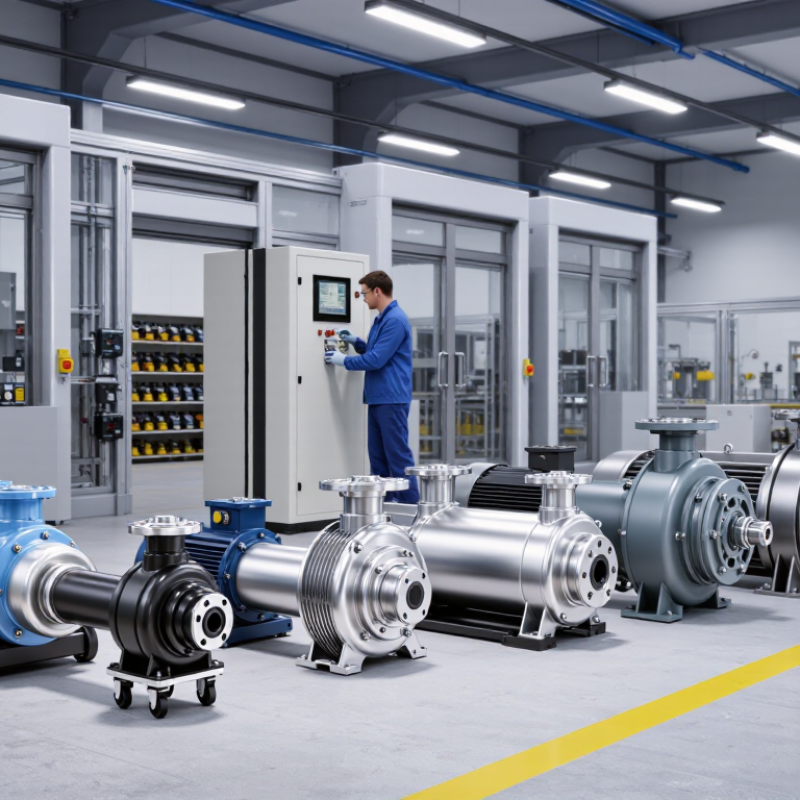
What Is an Industrial Vacuum Pump?
An industrial vacuum pump is a machine that removes gas from a sealed space. This process creates pressure below normal atmospheric pressure. Unlike a household vacuum cleaner, it supports manufacturing processes that need controlled pressure. Common uses include vacuum drying, packaging, coating, heat treatment, and material handling.
Several pump designs serve different conditions. Rotary vane pumps provide stable vacuum for general production. Dry screw pumps avoid oil contact, which benefits clean processes. Liquid ring pumps handle wet gases and vapor better. The correct choice depends on required vacuum level, pumping speed, gas composition, temperature, and moisture. Clean and dry.
In practical plant inspections, engineers often find that leaks cause more trouble than pump capacity. Small leaks matter. A reliable assessment checks seals, hoses, valves, filters, and exhaust lines before replacing equipment. A pump may reach its rated pressure in a laboratory, yet perform poorly beside a hot process chamber. Vapor can also condense inside the system and damage oil or reduce efficiency. I have seen maintenance teams focus on motor noise while ignoring a blocked separator. That is an easy mistake. Regular pressure readings, oil checks, vibration monitoring, and scheduled seal replacement provide stronger evidence of operating health. Selection should also consider noise, energy use, service access, and available technical support. A cheaper pump can become expensive when downtime, contamination, and frequent repairs are included.
China Top 10 Industrial Vacuum Pump Manufacturers? - What Is an Industrial Vacuum Pump?
Industrial Vacuum Pump Technologies and Selection Reference
| No. | Pump Technology | Operating Principle | Typical Ultimate Pressure Range | Typical Capacity Range | Common Industrial Applications | Main Advantages | Key Limitations | Maintenance Considerations |
|---|---|---|---|---|---|---|---|---|
| 1 | Oil-Sealed Rotary Vane | Uses rotating vanes in an oil-sealed chamber to compress and discharge gas. | Approximately 10-3 to 1 mbar | About 2–1,500 m³/h | Vacuum packaging, refrigeration service, laboratory systems, metallurgy, and general process equipment. | Compact design, strong starting capability, good ultimate vacuum, and broad availability. | Oil contamination is possible; performance can be affected by condensable vapors and particulate matter. | Regular oil changes, exhaust-filter inspection, vane inspection, and inlet filtration are required. |
| 2 | Dry Screw | Two non-contacting screws transport and compress gas without lubricating oil in the pumping chamber. | Approximately 10-3 to 10 mbar | About 20–2,500 m³/h | Semiconductor processing, chemical production, food processing, drying, and clean industrial systems. | Oil-free vacuum, good tolerance of many vapors, and low risk of process contamination. | Higher purchase cost; screw clearance and temperature control are important. | Service intervals depend on gas load, dust exposure, sealing condition, and operating temperature. |
| 3 | Liquid Ring | A rotating impeller forms a liquid ring that traps, compresses, and discharges gas. | Approximately 30–1,000 mbar | About 10–10,000 m³/h | Evaporation, distillation, pulp and paper, power generation, mining, and wastewater treatment. | Excellent tolerance of wet gases, dust, and liquid carryover; reliable for harsh processes. | Requires operating liquid; efficiency and ultimate vacuum depend on liquid temperature and vapor pressure. | Monitor liquid quality, seal water flow, corrosion, cavitation, and separator performance. |
| 4 | Claw | Counter-rotating claws move gas through a compression chamber without contact or oil lubrication. | Approximately 50–150 mbar | About 40–1,000 m³/h | Pneumatic conveying, packaging, woodworking, medical systems, and central vacuum installations. | Dry operation, low routine lubrication needs, energy efficiency, and compact construction. | Not suitable for every condensable or abrasive process; ultimate pressure is moderate. | Keep inlet filters clean and inspect bearings, seals, and internal clearances according to duty cycle. |
| 5 | Roots Booster | Two lobed rotors move gas at high volume with a small pressure difference; normally used with a backing pump. | Approximately 10-3 to 10-1 mbar with a backing pump | About 100–10,000 m³/h | Vacuum drying, heat treatment, coating, freeze drying, and large-volume vacuum systems. | High pumping speed, fast evacuation of large chambers, and oil-free pumping in the gas path. | Cannot normally operate from atmospheric pressure without bypass or suitable control; sensitive to overload. | Check timing gears, bearings, bypass operation, seals, and motor protection systems. |
| 6 | Diaphragm | A flexible diaphragm oscillates to alternately draw in and compress gas. | Approximately 1–10 mbar | About 0.5–100 m³/h | Laboratory filtration, chemical handling, sampling, vacuum concentration, and small-scale process equipment. | Oil-free, chemically resistant options are available, and maintenance is relatively straightforward. | Limited flow and ultimate vacuum compared with larger industrial pump technologies. | Diaphragms and valves are wear components; chemical compatibility must be checked carefully. |
| 7 | Piston | Reciprocating pistons use valves or controlled ports to intake and compress gas. | Approximately 1–100 mbar | About 1–500 m³/h | Vacuum lifting, packaging, printing, material handling, and intermittent industrial service. | Robust construction, good pressure flexibility, and suitability for intermittent operation. | Produces pulsation and vibration; moving parts may require more frequent service. | Inspect piston seals, valves, crank mechanisms, filters, and vibration-mounting components. |
| 8 | Scroll | One fixed and one orbiting scroll compress gas through progressively smaller pockets. | Approximately 10-2 to 10 mbar | About 1–40 m³/h | Clean laboratories, analytical instruments, semiconductor support equipment, and medical applications. | Low vibration, quiet operation, compact size, and oil-free pumping. | Scroll tips are wear-sensitive; abrasive particles and heavy condensate can reduce service life. | Replace tip seals as needed and use appropriate inlet protection for particulate or vapor-heavy duty. |
| 9 | Diffusion | High-speed vapor jets transfer gas molecules toward a backing pump by momentum exchange. | Approximately 10-7 to 10-3 mbar | About 50–50,000 L/s | High-vacuum coating, vacuum furnaces, research systems, and large laboratory chambers. | High pumping speed, no moving parts in the pumping stage, and proven high-vacuum performance. | Requires a suitable backing pump; oil backstreaming and strict cleanliness control may be concerns. | Maintain heater condition, cooling water, foreline pressure, traps, and high-vacuum cleanliness. |
| 10 | Turbo-Molecular | Rapidly rotating blades transfer momentum to gas molecules and direct them toward a backing pump. | Approximately 10-10 to 10-3 mbar | About 50–3,000 L/s | Semiconductor manufacturing, surface analysis, particle accelerators, research, and advanced coating. | Very clean high-vacuum operation, high compression for light gases, and fast evacuation at low pressure. | Requires clean operation and a backing pump; bearings and rotors can be sensitive to shock and contamination. | Control vibration, cooling, bearing condition, foreline pressure, and emergency venting procedures. |
Related Posts
-
2026 Top Airtech Vacuum Pumps for Global Buyers FAQs
-
Top Rotary Vacuum Pump Types for Efficient Industrial Applications?
-
Unlocking Efficiency: The Science Behind Dry Rotary Vane Vacuum Pumps and Their Industry Applications
-
China Best High Vacuum Pump Manufacturers Suppliers?
-
Top Factors to Consider When Choosing a High Vacuum Pump for Your Needs
-
China Best High Vacuum Pump Manufacturer Supplier