How to Choose the Best Vacuum Pump for Your Needs?
Choosing the right vacuum pump is crucial for various industries, from manufacturing to laboratories. In 2021, the global vacuum pump market was valued at approximately $4.22 billion, and it is projected to reach around $6.68 billion by 2027, according to a report by Research and Markets. This growth underscores the importance of making an informed choice. Selecting a vacuum pump involves understanding specific needs such as the application, required pressure range, and the chemical nature of the materials involved.
The efficiency of a vacuum pump can greatly influence operational costs and productivity. A poor choice could lead to operational inefficiencies, increased energy consumption, and potential product loss. Different types of vacuum pumps, such as rotary vane, diaphragm, and scroll pumps, serve distinct purposes. However, each type comes with its unique advantages and limitations. It's essential to analyze these factors critically. Relying on expert recommendations and user testimonials can provide valuable insights. Ultimately, the goal is to find a vacuum pump that delivers reliability and performance tailored to the specific application.

Understanding the Different Types of Vacuum Pumps Available
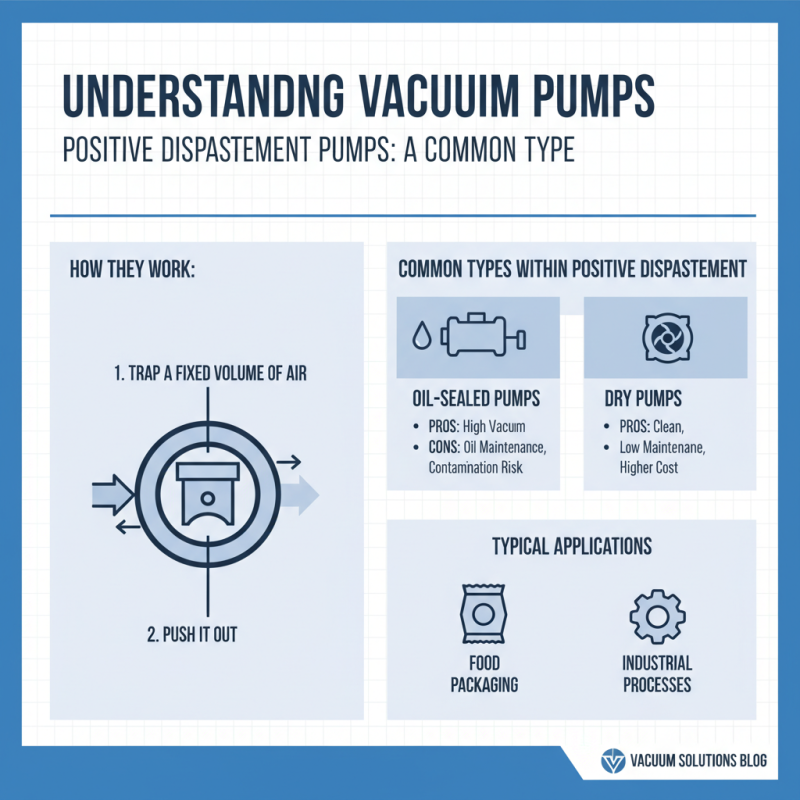
When it comes to selecting a vacuum pump, understanding the types available is crucial. Positive displacement pumps are among the most common types. They function by trapping a fixed volume of air and then pushing it out. These pumps are reliable for applications like food packaging and industrial processes. Oil-sealed and dry pumps are popular within this category, each with its own pros and cons.
Another category is kinetic pumps, which are great for achieving high vacuum levels. These pumps work by using a rotating impeller to provide the necessary energy. They are often found in research institutions and laboratories. However, they may require more maintenance compared to positive displacement models.
It’s important to consider your specific needs. A common misstep is choosing a pump based solely on price. For example, a low-cost pump might not handle the required pressure effectively, leading to inefficiencies. The material compatibility is often overlooked as well. Using a pump not suited for certain chemicals can result in premature failure. Think about these factors before making a choice.
Assessing Your Specific Vacuum Requirements and Applications
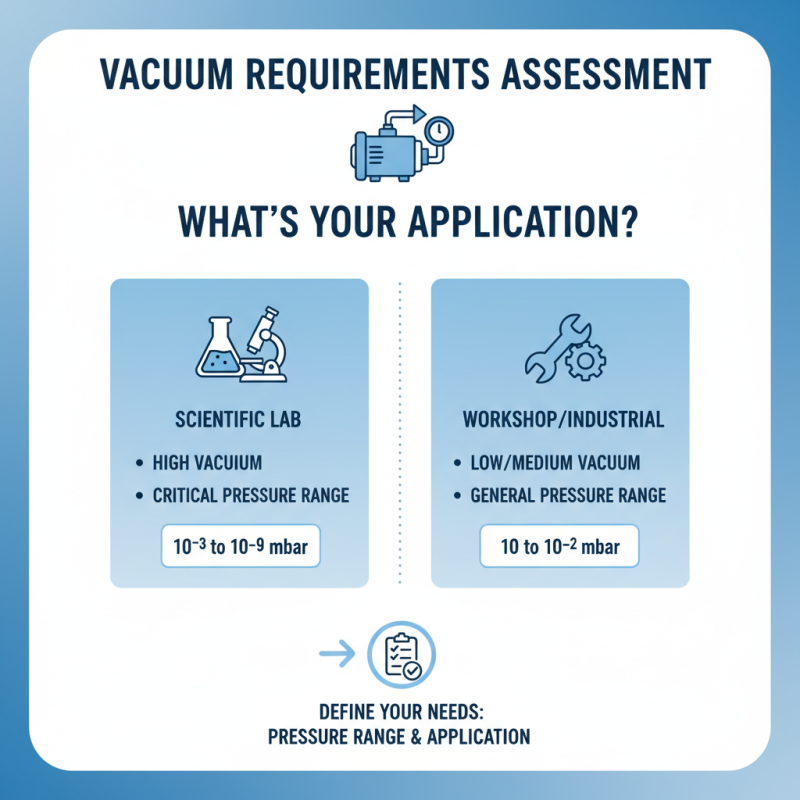
Choosing the right vacuum pump begins with understanding your specific requirements. Consider the application where you will use it. Different tasks require different levels of vacuum. For instance, a scientific lab might need a high-vacuum solution, while a workshop may only require a low to medium vacuum. Knowing the exact pressure range you need is crucial.
Next, evaluate the volume of air you need to evacuate. This is often measured in liters per minute (L/min). If your process needs rapid evacuation, you might choose a pump with a higher throughput. However, faster isn't always better; sometimes more careful, slower evacuation suits delicate operations. Think about the materials and substances you will handle as well. If you are dealing with corrosive substances, a pump with appropriate materials is essential.
Finally, consider the pump’s ease of maintenance. Some pumps require regular servicing, while others have a more straightforward upkeep. This can significantly affect your workflow. Reflect on your capacity to perform maintenance when choosing the best vacuum pump. Making the right choice hinges on balancing these various factors against your specific needs.
Key Features to Consider When Selecting a Vacuum Pump
When choosing a vacuum pump, consider the application requirements. Different tasks demand varying levels of vacuum for optimal performance. For instance, a scientific lab might need a high vacuum for experiments, while an automotive shop could require a medium vacuum for brake service. Assessing your specific needs helps narrow down options.
Next, evaluate the pump's capacity and speed. Look for specifications that indicate how quickly a pump can achieve a particular vacuum level. Some pumps may perform better but are slower, affecting productivity. Additionally, noise levels are important. If the pump operates in a sensitive environment, quieter options are preferable.
Maintenance and reliability are also key. A reliable vacuum pump should require minimal upkeep. It’s important to check the manufacturer’s guidelines for service intervals. Pumps that are easy to maintain often reduce downtime in critical operations. However, balancing cost and functionality can be tricky. Sometimes, a cheaper pump may not deliver the long-term satisfaction expected. Always weigh initial costs against the longevity and performance expected.
How to Choose the Best Vacuum Pump for Your Needs? - Key Features to Consider When Selecting a Vacuum Pump
| Feature |
Description |
Importance |
| Pump Type |
Different types (e.g., rotary vane, diaphragm, scroll) serve various applications. |
Essential for matching the pump to your application. |
| Pumping Speed |
Measured in liters per minute (L/min), indicates how fast a pump moves air. |
Crucial for efficiency in your specific application. |
| Ultimate Vacuum |
The lowest pressure a pump can achieve, affecting the level of vacuum. |
Important for applications requiring deep vacuum conditions. |
| Noise Level |
Measured in decibels (dB), can affect usability in work environments. |
Considered for user comfort and workplace regulations. |
| Maintenance Requirements |
Frequency and type of upkeep needed to keep the pump operational. |
Directly affects operational costs and downtime. |
| Portability |
Weight and design impact ease of transport for field applications. |
Important for users who need to move equipment frequently. |
| Power Source |
Electric or pneumatic; affects where the pump can be used. |
Critical for ensuring power availability at the worksite. |
Evaluating Performance: Flow Rate, Ultimate Vacuum, and Efficiency
When evaluating vacuum pumps, three key performance metrics stand out: flow rate, ultimate vacuum, and efficiency. Flow rate measures how quickly a vacuum pump can remove air from a chamber. A higher flow rate can significantly shorten the time required to achieve desired conditions. However, don’t overlook the trade-offs. Pumps with excessive flow rates might have higher power consumption, which can increase operational costs.
Ultimate vacuum is another critical factor. It indicates the lowest pressure a vacuum pump can achieve. Depending on your application, a higher ultimate vacuum may be essential. For instance, in scientific research or in semiconductor manufacturing, achieving low pressure is crucial. However, some pumps might struggle to reach their advertised vacuum levels under varying conditions. Always consider the specific needs of your application to avoid potential pitfalls.
Efficiency plays a vital role in overall performance. It measures how effectively a vacuum pump converts power into useful work. An efficient pump minimizes energy consumption while maintaining performance. Though you might encounter pumps that promise high efficiency, actual performance can vary. Verifying specifications through user testimonials or expert reviews helps ensure reliability. An ideal vacuum pump balances flow rate, ultimate vacuum, and efficiency to meet your unique requirements.
Vacuum Pump Performance Evaluation
Budget Considerations: Finding the Best Value for Your Vacuum Pump
When choosing a vacuum pump, budget plays a crucial role. It’s essential to identify how much you are willing to spend. Quality often parallels price, but affordable options can still meet your needs. Research different types of vacuum pumps within your budget range. Compare features and capabilities.
Consider what you need the pump for. Pumps designed for light use are cheaper but may lack longevity. Industrial-grade pumps are costlier but offer durability and superior performance. Aim for the best value, not just the lowest price. A low-cost pump could end up costing more in repairs or replacements.
It’s not easy to find the right balance. Customer reviews can be helpful, yet they can also be misleading. Look for reviews from credible sources. Understanding your requirements can save you money. Evaluate after-sales service and warranty options. This adds reliability to your purchase. Make an informed choice based on your specific intentions.