
China Top 10 Powder Pressing Machine Manufacturers

China’s powder metallurgy sector has become a practical force in global manufacturing. Powder Pressing Machine suppliers now serve automotive, electrical, ceramic, and hard-material applications. Their equipment converts controlled powder into compact parts with repeatable density.

Grand View Research estimates that the global powder metallurgy market will expand steadily through 2030. MarketsandMarkets also identifies automotive electrification, lightweight components, and material efficiency as major growth drivers. However, these reports define market boundaries differently. The picture is not perfectly uniform. That limitation deserves attention.

Dr. Randall M. German, a respected powder metallurgy researcher, describes powder metallurgy as “a net-shape technology.” His observation explains the value of modern pressing systems. Less machining can mean lower waste, shorter production cycles, and more consistent dimensions. Yet performance depends on more than pressure. Die design, powder flow, lubrication, cycle control, and density distribution all matter.

In a factory, the difference may appear as a small crack, uneven color, or a rejected batch. Therefore, selecting among China’s top 10 Powder Pressing Machine manufacturers requires more than comparing tonnage. Buyers should examine servo control, mold accuracy, maintenance access, testing records, and after-sales support. Certifications help, but they do not replace operating evidence.

Some manufacturers excel in high-volume metal parts. Others focus on ceramic powders or customized hydraulic systems. No supplier is perfect. This guide compares their capabilities, documented experience, technical focus, and international reliability, helping engineers make a more informed decision.
China Top 10 Powder Pressing Machine Manufacturers

What Is a Powder Pressing Machine?

What Is a Powder Pressing Machine?

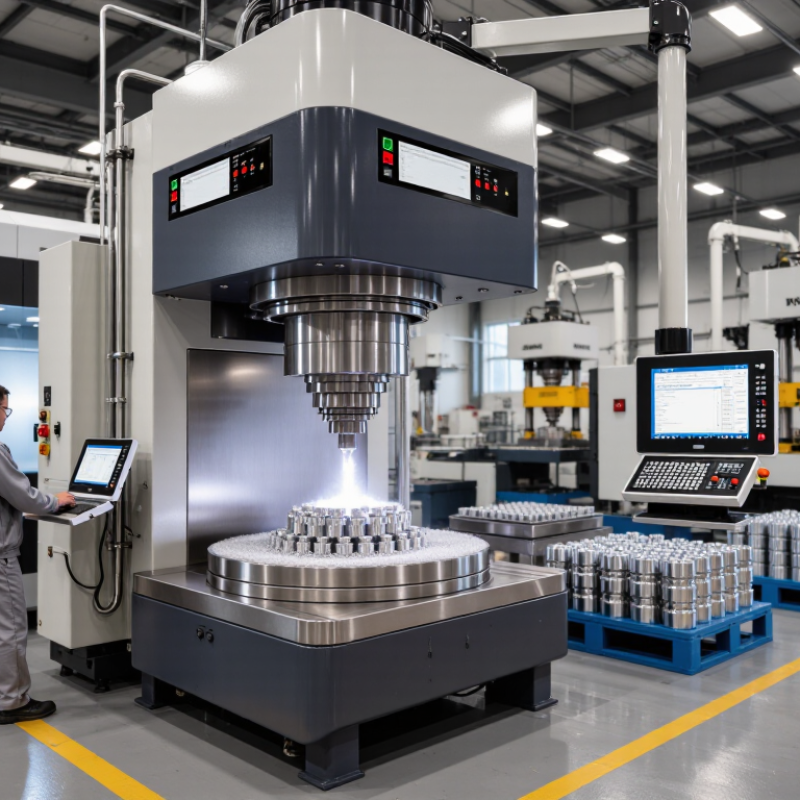
A powder pressing machine compacts metal, ceramic, or composite powder inside a shaped die. It uses an upper punch, lower punch, and controlled pressure to form a “green compact.” The compact holds its shape but remains fragile. It usually requires sintering, where heat strengthens the part without fully melting it.

Modern machines may use mechanical, hydraulic, or servo-electric systems. Operators adjust filling depth, pressing force, dwell time, and ejection speed. A small variation in powder flow can create cracks, density differences, or weak edges. Real production experience shows that tooling alignment matters as much as rated tonnage.

Industry figures explain the growing interest. A 2024 MarketsandMarkets report estimated the powder metallurgy market could grow from about USD 2.7 billion in 2024 to USD 4.0 billion by 2029. Forecasts differ, however, because some reports include additive processes and others do not. That detail deserves attention.

A suitable press should match powder behavior, part geometry, tolerance, and expected cycle time. Laboratory trials should measure green density at several points, not only the average. This step can reveal hidden defects. More pressure is not always better. Over-compaction may damage the die or reduce material flow during sintering.

China Top 10 Powder Pressing Machine Manufacturers — What Is a Powder Pressing Machine?

A powder pressing machine compacts metal, ceramic, or carbide powder inside a die to form a precise “green” part before sintering. The chart shows representative midpoints of commonly reported compaction-pressure ranges for major powder materials; actual settings vary by powder formulation, part geometry, and tooling.

Pressure values are indicative engineering ranges: aluminum 200–400 MPa, copper 300–600 MPa, iron-based powder 400–800 MPa, technical ceramics 50–300 MPa, and tungsten carbide 1,000–2,000 MPa.

How Powder Pressing Machines Work

A powder pressing machine converts loose powder into a controlled shape through pressure. The process begins when a measured charge enters a metal die. A lower punch supports the powder bed. An upper punch then moves downward and compresses the material. Pressure travels through the particles, reducing air gaps and creating a compact form.

The machine does more than squeeze. Its feeder controls the fill depth, while sensors monitor force, position, and cycle timing. During pressing, particles rearrange, fracture, and bond through mechanical force. A short dwell period can improve density consistency. The lower punch then rises and gently ejects the compact. Tool alignment matters greatly. Even slight wear may produce cracks, uneven edges, or weight variation.

A technician should check powder flow before adjusting pressure. Moisture, particle size, and lubricant levels can change the result. Higher pressure is not always better. It may damage tooling or create internal stress that appears after ejection. A small flaw matters. In practical production, operators often compare sample weights, dimensions, and surface condition throughout a shift. I would not rely on force readings alone, because stable pressure can still hide poor filling. Regular calibration, clean tooling, and careful records make machine performance more dependable.

Key Factors for Evaluating Chinese Manufacturers

China Top 10 Powder Pressing Machine Manufacturers: Key Factors for Evaluating Chinese Manufacturers

Choosing a powder pressing machine requires more than comparing tonnage and prices. Check pressure stability, die alignment, feeding accuracy, and density variation across test parts. The 2024 World Robotics report states that China installed 276,288 industrial robots in 2023. This indicates strong automation capacity, but it does not prove every manufacturer offers consistent engineering quality. Ask for factory acceptance test records, calibration certificates, and sample parts made with your powder.

Supplier evaluation should include materials, software, maintenance, and traceability. A reliable manufacturer can explain servo control, hydraulic protection, cycle-time limits, and tooling compatibility in clear language. Request data from at least three production runs. Compare green-part weight, dimensions, surface defects, and rejection rates. The World Bank’s Logistics Performance Index 2023 ranked China 19th globally, with a score of 3.7. Logistics are capable, yet spare-part planning still matters. A delayed seal or sensor can stop a production line.

Tips: Visit the factory when possible. Watch one complete pressing cycle. Inspect wiring, guarding, lubrication points, and emergency stops. Ask who responds after installation and how quickly. Do not trust attractive videos alone. I would also challenge unusually low quotations. They may exclude tooling, commissioning, training, or export packaging. One overlooked detail can become an expensive lesson. A written performance guarantee is safer than a confident promise. Recheck every claim against test evidence, user references, and applicable safety requirements.

China Top 10 Powder Pressing Machine Manufacturers - Key Factors for Evaluating Chinese Manufacturers

Rank Evaluation Factor What to Verify Documented Evidence or Benchmark Weight Score
1 Powder Compaction Capability Press type, nominal force, stroke, pressing speed, die size, and compatibility with the target powder and part geometry. Technical datasheet, engineering drawings, material trials, and samples produced using the buyer’s powder formulation. 20% /10
2 Dimensional Accuracy and Repeatability Control of pressing force, filling depth, position, density distribution, and cycle-to-cycle repeatability. Inspection reports, capability studies, sample measurements, and acceptance criteria agreed before purchase. 15% /10
3 Machine Construction and Tooling Frame rigidity, die alignment, wear-resistant components, tooling quality, and ease of die changeover. Material specifications, structural drawings, tooling inspection records, and preventive-maintenance schedule. 12% /10
4 Automation and Process Control PLC and HMI functions, recipe management, alarms, data recording, sensor integration, and line communication. Control-system architecture, user-interface demonstration, electrical drawings, and communication protocol list. 10% /10
5 Safety and Compliance Guarding, emergency stops, interlocks, electrical protection, risk assessment, and conformity for the destination market. Risk assessment aligned with ISO 12100, electrical documentation aligned with IEC 60204-1 or GB/T 5226.1, and applicable conformity records. 12% /10
6 Quality Management System Incoming inspection, process control, final testing, traceability, corrective actions, and supplier management. Current ISO 9001 certificate, quality procedures, inspection plans, calibration records, and nonconformance reports. 8% /10
7 Customization and Engineering Support Ability to adapt feeders, dies, discharge systems, sensors, software, and layout to the customer’s process. Application review, process-flow proposal, 2D or 3D layout, trial plan, and named engineering contact. 8% /10
8 Factory Acceptance and Performance Testing Availability of factory testing, production-rate verification, sample inspection, and documented acceptance criteria. Signed FAT protocol, production samples, test videos, dimensional reports, and punch-list closure records. 5% /10
9 After-Sales Service and Spare Parts Installation, training, remote support, response time, warranty terms, spare-parts availability, and service coverage. Service-level agreement, spare-parts list, maintenance manual, training plan, and written warranty conditions. 5% /10
10 Total Cost of Ownership Equipment price, tooling, installation, freight, energy consumption, maintenance, consumables, and expected operating life. Itemized commercial quotation, utility requirements, maintenance-cost estimate, delivery terms, and payment schedule. 5% /10
Weighted Evaluation Result 100% /10

Scoring method: assign each factor a score from 1 to 10, multiply it by the stated weight, and compare only evidence that has been independently verified or documented in the supplier’s quotation, test report, certification file, or factory audit.

China’s Top 10 Powder Pressing Machine Manufacturers

China’s Top 10 Powder Pressing Machine Manufacturers represent a competitive group of industrial equipment producers. Their machines serve ceramic, powder metallurgy, electrical, and other controlled manufacturing applications. This ranking should not be treated as an official government list. It reflects practical indicators, including engineering capability, production experience, service quality, and documented customer performance.

A reliable manufacturer should explain pressing force, die size, filling accuracy, cycle time, and suitable powder types. Factory visits can reveal important details, such as machining quality, hydraulic cleanliness, and operator training. Strong suppliers usually provide load testing, calibration records, safety guards, and clear maintenance instructions. These details matter on the production floor. A polished brochure is not enough.

The leading ten manufacturers often support customized automation, temperature control, dust management, and data monitoring. Their engineers should assess powder flow before recommending a machine. Poor flow can cause density variation, even when the press appears powerful. I have found that after-sales response deserves equal attention. Spare-part availability, remote diagnostics, and local technical support can reduce costly downtime. Still, every ranking has limits. Some performance data is difficult to verify, and smaller manufacturers may be overlooked. Buyers should compare test samples, contract terms, certifications, and total operating costs before making a decision.

Applications, Benefits, and Selection Guidelines

China Top 10 Powder Pressing Machine Manufacturers: Applications, Benefits, and Selection Guidelines

When comparing China’s top ten powder pressing machine manufacturers, begin with the application, not the catalog price. These machines form ceramic tiles, magnetic components, metal parts, graphite products, and other precision shapes. In a workshop, consistent filling can mean the difference between a smooth batch and cracked edges. Hydraulic presses suit high-force operations, while mechanical systems often support faster cycles. Servo-controlled models offer careful adjustment of pressure, speed, and dwell time.

The main benefits include repeatable density, reduced material waste, and lower manual effort. Modern controls can record pressure curves and alert operators when values drift. That evidence helps with quality checks and process training. However, automation does not fix poor powder preparation. Moisture, particle size, and lubricant distribution still matter. I have seen expensive equipment perform badly because the feed system was ignored.

Selection requires practical testing. Match the rated force with the powder’s compression behavior and the required production volume. Check die dimensions, cycle speed, ejection control, guarding, and emergency functions. Ask for sample pressing trials using your actual powder. A larger machine is not automatically better. It may consume more energy and reduce useful floor space. Review installation support, spare-part availability, software access, and operator training. Confirm that the equipment meets applicable safety and electrical requirements in your market. Leave room for maintenance. That detail is often underestimated.