Choosing the right blower pump manufacturer in 2026 requires more than comparing prices and catalog photographs. Global buyers must examine airflow, pressure stability, energy consumption, materials, service coverage, and documented manufacturing quality. A blower pump may support wastewater aeration, pneumatic conveying, medical equipment, packaging lines, or industrial vacuum systems. Each application creates different performance demands.
This guide reviews leading blower pump manufacturers serving international markets. It considers engineering experience, product consistency, testing procedures, customization capacity, and after-sales support. Practical details matter. Can the supplier provide a tested performance curve? Are replacement seals available near your operating region? Does the factory explain noise levels, motor efficiency, and installation requirements clearly?
The selection also considers certifications, export experience, warranty terms, and technical communication. Reliable manufacturers usually provide traceable specifications, inspection records, and responsive engineering assistance. Their product information should remain understandable, even when systems become complex. No ranking is perfect. Market data changes, regional service quality varies, and one factory may suit a chemical plant but fail a small food-processing project. That limitation deserves attention.
Readers should compare suppliers against actual operating conditions, not impressive claims alone. Check inlet temperature, continuous duty hours, required pressure, altitude, and maintenance access before requesting quotations. A low purchase price can become expensive when energy use rises or parts arrive slowly. This 2026 overview offers a practical starting point for buyers seeking dependable equipment, clearer decisions, and long-term operating value.
Blower Pump Basics: Types, Uses, and Operating Principles
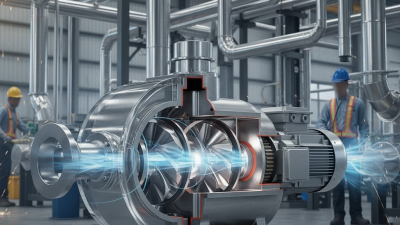
A blower pump moves air or gas by creating a pressure difference. Common designs include rotary lobe, screw, regenerative, and diaphragm units. Rotary lobe blowers use two counter-rotating lobes to trap and move air. Screw blowers compress gas gradually between rotating profiles. Regenerative blowers use an impeller to circulate air through a narrow channel. Their compact structure suits lower-pressure applications.
These pumps support wastewater aeration, pneumatic conveying, vacuum lifting, packaging, and industrial drying. In aeration tanks, steady airflow helps maintain oxygen levels for biological treatment. In conveying systems, controlled pressure moves powders through sealed pipes. Operating conditions matter greatly. Flow rate, pressure, gas temperature, altitude, and moisture can change performance. A pump selected only by motor power may underperform. Real installations rarely match catalog conditions exactly.
Tips: Confirm required flow and pressure at the actual site temperature. Check whether the gas contains dust, oil, or moisture. Install filters, silencers, and pressure relief devices where appropriate. Listen for unusual vibration or rising temperature during operation. Small warning signs matter. A simple selection chart can mislead, so compare tested curves and maintenance requirements. Allowing extra capacity sounds safe, but excessive pressure can waste energy and shorten equipment life.
2026 Top Blower Pump Manufacturers for Global Buyers
When comparing blower pump manufacturers, start with operating data, not attractive catalog images. A reliable supplier should state airflow, pressure, power consumption, noise, and operating temperature under clear test conditions. Ask for performance curves at several working points. One number is rarely enough.
Factory experience matters. Review the manufacturer’s production history, testing equipment, and quality controls. Can technicians balance rotating parts and inspect seals before shipment? Request sample inspection records, material specifications, and traceable serial numbers. During commissioning, small details become expensive problems. A poorly matched inlet filter may increase pressure loss and reduce output. I have seen buyers focus on purchase price while overlooking spare parts, delivery time, and technician response. That comparison was incomplete.
Energy use deserves careful attention. Calculate lifecycle cost over several years, including maintenance, electricity, downtime, and replacement components. Compare motors, control systems, and expected service intervals under your actual duty cycle. Ask whether the supplier provides remote support, installation guidance, and clear warranty terms. Certifications should match the destination market and application, but documents alone do not prove consistent quality. Visit the facility when possible. Speak with recent industrial customers. Their feedback may reveal delays that a polished audit cannot. Some evaluations still rely on assumptions. Recheck them with measured site data.
Pressure capability is a practical starting point when comparing blower pump technologies. The chart shows representative maximum pressure-rise levels commonly used in industrial air and gas applications; actual performance depends on the model, speed, cooling method, gas composition, and operating conditions.
When evaluating manufacturers, buyers should also compare flow stability, energy efficiency, noise, service support, material compatibility, control options, and lifecycle cost alongside pressure capability.
The global blower pump market now includes established engineering groups and specialized regional manufacturers. Leading producers commonly serve wastewater, pneumatic conveying, aquaculture, medical equipment, and factory automation. Their designs range from compact side-channel units to heavy-duty rotary lobe systems. Each category suits a different pressure, airflow, and operating cycle.
European manufacturers often emphasize efficient motors, low noise, and documented testing. East Asian producers frequently offer broad model ranges and flexible production volumes. North American suppliers are known for custom packages, service support, and industrial integration. In the Middle East and Southeast Asia, regional manufacturers increasingly focus on corrosion resistance and harsh operating environments. A serious buyer should examine test curves, motor efficiency, seal design, spare-part availability, and local technical support.
Field experience shows that catalog capacity can be misleading. Actual airflow may fall sharply at higher pressure. Ask for performance data under your working conditions. Review factory inspection records, warranty terms, and maintenance instructions before ordering. Certification matters, but it does not replace application testing. No supplier is perfect. Even reliable manufacturers may have delayed parts or inconsistent communication during busy seasons. Buyers should compare at least three qualified producers and request a sample inspection when practical. A quiet pump may still consume excessive energy. That detail is easy to miss.
For global buyers, blower pump quality begins with evidence, not polished brochures. ISO’s Survey 2022 recorded 1,265,216 ISO 9001 certificates worldwide, yet certification alone cannot prove stable airflow. Ask for calibration records, material traceability, and batch-level pressure testing. Each unit should show measured flow, vacuum, noise, vibration, and power consumption at defined operating points. Small details matter. A loose terminal can stop a reliable-looking machine.
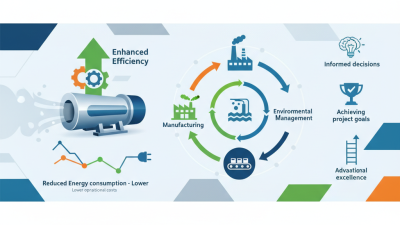
Production capability deserves equal attention. IEA’s Energy Efficiency 2023 report states that industry consumed about 37% of global final energy in 2022. Efficient blower pumps can therefore reduce operating costs and equipment-room heat. Buyers should compare motor efficiency classes, inverter compatibility, impeller balance, and performance across the full load range. Request endurance-test data, not only laboratory peak values. Peak numbers can mislead.
Certifications should match the destination and application. ISO 9001 supports controlled quality processes, while ISO 14001 indicates structured environmental management. CE documentation may apply to equipment entering the European market, but the technical file must match the actual configuration. For electrical safety, request the relevant test reports and protection ratings. Production audits should examine machining tolerances, winding processes, clean assembly areas, spare-parts storage, and final inspection. I have seen capable factories lose consistency during rapid expansion. That risk deserves honest discussion. A supplier’s weakness may be temporary, but undocumented weakness is harder to manage.
2026 Top Blower Pump Manufacturers for Global Buyers
How Global Buyers Can Select the Right Blower Pump Supplier
Selecting a blower pump supplier requires more than comparing catalogue prices. Match the pump’s flow rate, pressure range, duty cycle, and gas temperature with your actual operating conditions. A unit rated for continuous service should have suitable bearings, cooling, seals, and motor protection. Ask for performance curves, noise data, efficiency figures, and factory test records. These documents reveal more than polished product photos.
I have found that reliable suppliers ask detailed questions before quoting. They should understand installation height, ambient temperature, voltage, pipe layout, and maintenance access. Check whether the supplier can provide material certificates, inspection reports, spare parts, and clear technical drawings. Response quality matters too. A fast answer is not always a useful answer. During one project, an attractive quotation concealed a poor fit between the pump and the existing piping. The mistake was preventable.
Tips: Request a sample test or witnessed performance test when the application is critical. Compare total operating cost, not only purchase price. Confirm warranty terms, delivery milestones, packaging quality, and after-sales support in writing. Speak with the engineering contact directly. Small details matter. Also, leave room for reflection: your first specification may be incomplete, and a good supplier should help identify that gap without exaggerating its claims.
A practical, brand-neutral comparison framework for evaluating blower pump manufacturers and suppliers
| Evaluation Dimension | Recommended Technical or Commercial Benchmark | Evidence Global Buyers Should Request | Why It Matters |
|---|---|---|---|
| Blower Technology | Select from positive-displacement lobe, screw, centrifugal, or regenerative technology according to flow, pressure, gas composition, and operating duty. | A technology-selection report, performance curves, and an application reference list. | Different blower designs have different pressure, efficiency, noise, pulsation, and maintenance characteristics. |
| Required Airflow | The supplier should size the unit using actual operating flow, standard flow, inlet temperature, inlet pressure, and gas density rather than a nominal catalog value alone. | A duty-point calculation showing flow units, reference conditions, tolerances, and turndown range. | Flow figures can differ significantly when expressed at actual, normal, or standard conditions. |
| Discharge Pressure or Vacuum | Confirm maximum continuous pressure, maximum differential pressure, vacuum level where applicable, and relief-device settings for the complete operating range. | Certified performance curves and a pressure-drop calculation for piping, filters, silencers, valves, and accessories. | Incorrect pressure assumptions can cause overheating, inadequate process performance, or premature failure. |
| Energy Efficiency | Compare specific power consumption at the actual duty point, including motor, transmission, inverter, cooling, and auxiliary losses where applicable. | Power-consumption data, test conditions, motor efficiency class, and variable-speed operating map. | Electricity consumption usually represents a substantial portion of total blower life-cycle cost. |
| Motor and Electrical Compatibility | Verify voltage, frequency, phase, starting method, motor efficiency class, enclosure rating, insulation class, and compatibility with variable-frequency drives. | Motor datasheet, wiring diagram, nameplate sample, and applicable conformity documentation. | Electrical mismatches can create commissioning delays, overheating, or non-compliance with local requirements. |
| Gas and Process Compatibility | The wetted materials, seals, coatings, and lubrication system must be compatible with oxygen, corrosive gases, moisture, dust, hydrocarbons, or other process media. | Materials-of-construction schedule, seal specifications, chemical compatibility statement, and operating limitations. | Gas composition and contamination directly affect safety, service life, and product performance. |
| Noise and Vibration | Request sound-pressure data with defined distance and test conditions, plus vibration limits and balancing information. | Factory test results, acoustic data, vibration acceptance criteria, and installation recommendations. | Noise and vibration influence workplace safety, equipment reliability, and foundation design. |
| Reliability and Duty Cycle | The selected blower should be rated for the required operating hours, starts per hour, ambient conditions, altitude, and load profile. | Reliability data, maintenance intervals, operating limits, failure-mode information, and comparable application references. | A unit designed for intermittent service may not be suitable for continuous industrial operation. |
| Manufacturing Quality System | Prefer suppliers operating a documented quality-management system certified to ISO 9001 or an equivalent recognized framework. | Current certificate, certification scope, issuing body, audit validity, and corrective-action process. | A quality system supports repeatable manufacturing, traceability, inspection, and corrective action. |
| Testing and Inspection | Require dimensional inspection, balance verification, leak checks where relevant, electrical testing, and performance testing against the purchase specification. | Inspection and test plan, factory acceptance test procedure, calibration records, and sample test report. | Documented testing reduces the risk of receiving equipment that cannot meet the stated duty point. |
| Safety and Regulatory Compliance | Match the equipment to the destination market and application, including machinery safety, electrical safety, electromagnetic compatibility, and hazardous-area requirements where applicable. | Declaration of conformity, risk assessment, applicable test reports, hazardous-area documentation, and user instructions. | Compliance obligations vary by country, installation environment, and process hazard. |
| Environmental Protection | Confirm enclosure protection, corrosion resistance, ambient temperature range, humidity limits, ingress protection, and outdoor installation requirements. | Environmental-rating data, coating specification, installation manual, and climate suitability statement. | Dust, moisture, salt, heat, and cold can materially reduce service life if not addressed during selection. |
| Maintenance Requirements | Evaluate lubrication intervals, filter replacement, belt or coupling maintenance, bearing access, inspection points, and expected overhaul requirements. | Maintenance schedule, parts list, service procedures, recommended spare-parts inventory, and training options. | Simple maintenance and accessible service points help reduce downtime and labor costs. |
| Spare Parts Availability | Set acceptable lead times for wear parts, bearings, seals, filters, control components, and complete replacement assemblies. | Regional inventory plan, standard spare-parts list, lead-time commitment, and part-number cross-reference. | Long spare-parts lead times can extend an otherwise preventable production outage. |
| Global Service Capability | Assess local technical support, commissioning assistance, remote diagnostics, multilingual documentation, and escalation procedures. | Service network map, response-time commitment, contact details, commissioning scope, and after-sales service terms. | Accessible support is especially important for international projects with limited local expertise. |
| Delivery and Export Readiness | Review production capacity, confirmed lead time, export packaging, shipping documents, customs support, and agreed Incoterms®. | Formal quotation, production schedule, packing specification, export-document checklist, and logistics plan. | Clear logistics planning reduces customs delays, transit damage, and project-schedule risk. |
| Warranty and Commercial Terms | Compare warranty duration, coverage exclusions, acceptance conditions, payment terms, liquidated damages, and resolution procedures. | Draft purchase agreement, warranty certificate, warranty exclusions, claims process, and acceptance protocol. | Transparent terms protect the buyer when actual performance differs from the contract specification. |
| Total Cost of Ownership | Calculate purchase price, installation, energy, maintenance, spare parts, downtime exposure, disposal, and expected service life. | A five- to ten-year life-cycle cost model using documented operating assumptions. | The lowest initial quotation is not necessarily the lowest-cost solution over the equipment life. |